

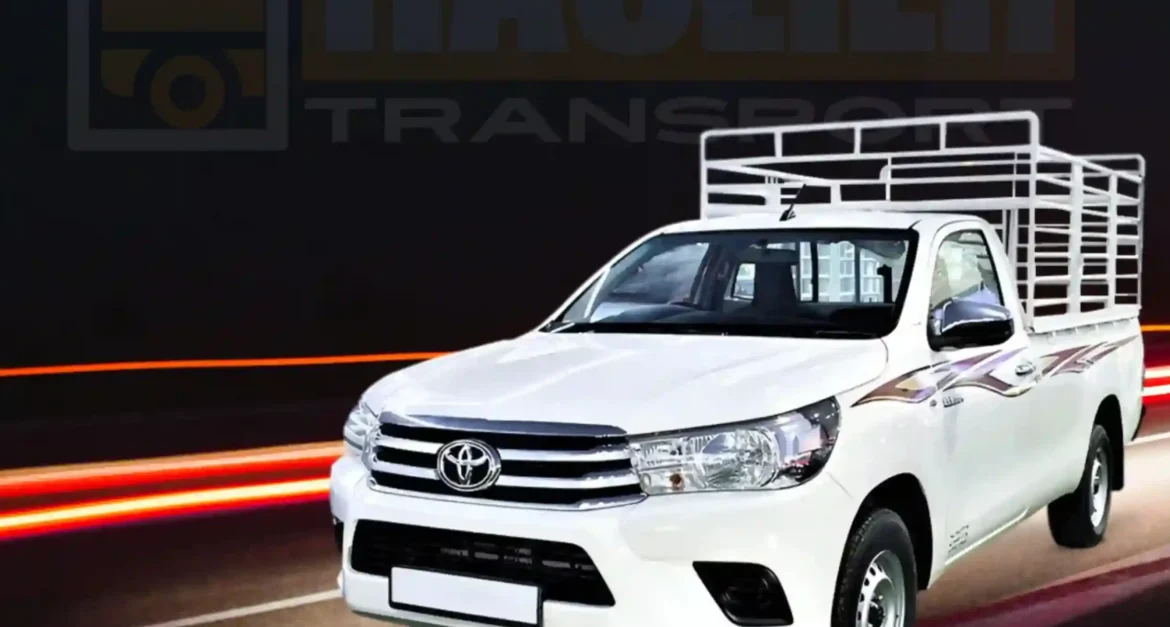
Running a small business in Dubai means keeping stock moving and getting orders to customers on time. Good small business delivery planning Dubai starts with choosing the right transport for your goods, whether you are collecting shop stock, delivering products or moving equipment
How Small Businesses in Dubai Use a 1 Ton Pickup for Deliveries
For many small businesses, transport is connected to everyday work rather than a separate logistics operation. A shop needs new stock, a supplier has an order ready, or a customer wants a product delivered to an address that is not easy to reach with an ordinary car. These are the kinds of situations where a suitable pickup may help.
A retailer might collect cartons from a supplier and bring them back to the shop. An online seller might arrange transport for several bulky orders that are ready for dispatch. A maintenance company might need to move tools and equipment between its workshop and a customer’s premises. Businesses may also use a pickup for occasional transfers between a warehouse and a retail outlet. Instead of treating every delivery as a separate problem, the owner can plan the collection, loading and drop-off around the day’s work.
For example, a shop in Deira receiving new merchandise may need to arrange collection from a supplier before the stock can be put on sale. A business in Al Quoz may need to move packaged products or workshop equipment to another location. In both cases, the suitable vehicle depends on the actual shipment, not just the business category. Businesses comparing their transport options can also review Haulier Transport’s 1 ton pickup for business transport page to understand the available vehicle option.
Which Small Businesses Can Benefit From a 1 Ton Pickup?
Not every business needs its own pickup or requires one every day. It is usually more useful for businesses that regularly handle physical goods that are awkward to carry in a car or too bulky for ordinary parcel delivery.
1. Retail Shops and Wholesale Traders
Shop owners often need to replenish products before shelves run empty. This can involve collecting cartons from a wholesaler, moving merchandise between branches or delivering larger purchases to customers. Consider a small household goods shop that receives several boxes of stock from a supplier. The owner needs to collect the order, bring it to the shop and get the products ready for sale. A suitable pickup may be a practical choice if the shipment fits safely within the vehicle’s limits.
Wholesale traders can have similar requirements when delivering smaller orders to shops, workshops or other businesses. The key is to check the quantity and dimensions before deciding whether a pickup is suitable.
2. E-commerce and Online Sellers
Online sellers often start with small orders that can be handled by couriers. As their products or order quantities change, however, some deliveries become more difficult to manage with ordinary parcel services. A seller dealing in home accessories, packaged products, display items or bulky merchandise may need to move several orders together. A pickup can be useful when the combined shipment is too large for a car but does not require a larger commercial vehicle.
This does not mean a pickup is the right answer for every online business. Sellers delivering many small parcels to individual homes may be better served by a courier service. A pickup is more relevant when the goods themselves justify the additional cargo space.
3. Furniture and Home Accessory Stores
Furniture shops often deliver individual items rather than full household loads. Small tables, chairs, shelves and selected boxed products may be suitable for pickup transport, depending on their measurements. For instance, a customer may buy a small table from a showroom and request delivery to an apartment. The shop needs to check the item’s size, packaging and weight before arranging the vehicle.
Large sofas, wardrobes and multiple furniture pieces may require a different option. Businesses should also consider how the goods will be protected during transport, particularly when the vehicle has an open load area.
4. Hardware and Electrical Suppliers
Hardware shops, electrical suppliers and maintenance businesses often move tools, fittings, cables, boxed equipment and other trade supplies. A supplier may need to deliver an order to a contractor working at a commercial property. A maintenance company may need to take equipment from its workshop to a customer’s premises. Both jobs can suit a smaller pickup when the goods are within the vehicle’s permitted limits. Heavy machinery, long materials and dense construction supplies need more careful assessment. A shipment can be unsuitable because of its weight or dimensions even if the total number of items seems small.
5. Printing and Packaging Businesses
Printing shops and packaging suppliers handle products such as printed cartons, promotional materials, packaging supplies and display items. These products can take up considerable space without being especially heavy. A pickup may suit a delivery to a retail customer, an office or an event location, provided the items fit securely.
For printed materials, packaging matters as much as the vehicle. Products should be protected from moisture, dust and damage during loading and transport.
When Does a Small Business Actually Need a Pickup?
The need often becomes clear when the business’s usual delivery method no longer suits the job. A car may be fine for a few small packages but impractical for several large cartons. A courier may be suitable for individual parcels but less convenient for bulky merchandise. A larger truck may be unnecessary for a small, compact shipment.
Before arranging transport, consider what has changed about the delivery:
- The order is larger than usual. More cartons or bigger products may no longer fit in the vehicle normally used.
- The goods are awkward to handle. A long item or bulky package may be difficult to carry safely in an ordinary car.
- Stock needs to move between locations. A supplier collection or branch transfer may require a dedicated trip.
- Equipment needs to reach a job site. Tools and supplies may need to be transported together rather than carried in several smaller loads.
- A customer needs a product delivered. The item may be too large for a standard parcel service.
A pickup should solve a real transport requirement. If the goods can be delivered more appropriately by a courier or another vehicle, there is no reason to choose a pickup simply because it is available.
What Should You Prepare Before Arranging a Business Delivery?
A little preparation can prevent avoidable problems on the day of collection. Start by listing the goods you need to move. Include the number of cartons, any unusually shaped items and the approximate total weight. If a product is large, measure it rather than relying on a photograph or description. Next, check the collection and delivery details. Make sure the supplier has prepared the order, the receiving person knows when it is expected and both locations have suitable loading or unloading access.
Packaging also deserves attention. Fragile items need protection, loose equipment should be secured, and cartons should be arranged so that they do not shift during the journey. For an open pickup, consider whether the goods need additional weather protection. Finally, confirm that the specific vehicle can carry the shipment safely. The term “1 ton” should not be treated as a guarantee that every vehicle has the same permitted payload or that every load will fit.
Providing these details before arranging transport makes it easier to determine whether the vehicle is appropriate for the job.
How Can Businesses Plan Regular Stock Deliveries?
Businesses that move goods frequently can benefit from reviewing their delivery pattern instead of arranging every collection at the last minute. A retailer might receive supplier orders on particular days. An online seller may have a larger dispatch workload after a promotion. A maintenance company may need to move equipment according to its scheduled jobs. In each case, planning starts with a few straightforward questions.
How often do you move goods?
A business that needs occasional collections has different requirements from one that transfers stock several times a week.
How much do you usually move?
Look at a typical shipment and the larger orders that occur during busy periods.
Where do the goods need to go?
The collection point, destination and unloading arrangements affect how the delivery should be organised.
Can the deliveries be planned together?
When timing permits, nearby destinations may be grouped into a sensible route. The load must still remain secure, and each customer must be able to receive the goods at the planned time.
Does the usual vehicle still suit the job?
If stock quantities grow and deliveries become more demanding, it may be time to consider another vehicle rather than continuing with an arrangement that no longer fits.
There is no single schedule that works for every business. The goal is to understand the actual workload and organise transport around it.
When Should You Choose a Different Vehicle?
A 1 ton pickup is not suitable for every shipment, even if the goods are being delivered for a small business. A larger vehicle may be necessary when the shipment exceeds the specific vehicle’s permitted payload, when items are too large to fit securely or when the volume of goods makes a smaller vehicle impractical.
The type of cargo matters, too. Goods that need a controlled temperature may require a suitable refrigerated or chiller vehicle. Fragile products may need additional protection, while heavy or unusually shaped items can require special loading arrangements. Before confirming a vehicle, check the cargo, its dimensions, the required protection and the access available at both locations. These details are more useful than choosing a vehicle based on its name alone.
Arranging Business Transport With Haulier Transport Dubai
When your business needs to move stock, products or equipment, start by describing the actual job. The type of goods, their approximate weight and dimensions, the collection point and the destination all help establish which vehicle may be suitable.
Haulier Transport Dubai provides transport options for different cargo requirements. If you are considering a small pickup for a business delivery, share the shipment details before confirming the arrangement so that the vehicle can be assessed against your needs. You can review the available 1 ton pickup option and contact Haulier to discuss your particular transport requirement.
The right choice is the vehicle that suits the load and the delivery conditions, not necessarily the smallest or largest one available. Planning those details in advance gives your business a clearer starting point for arranging transport.
Frequently Asked Questions
What businesses use a 1 ton pickup in Dubai?
Retail shops, wholesalers, online sellers, furniture stores, hardware suppliers, printing businesses and maintenance companies may use a 1 ton pickup for suitable deliveries. The decision depends on the goods, their size and weight, and the delivery requirements.
Can a 1 ton pickup be used for shop stock deliveries?
Yes, it may be suitable for collecting cartons from suppliers, delivering products to customers or transferring stock between branches, provided the shipment fits safely within the vehicle’s limits.
Is a 1 ton pickup suitable for an online business?
It can suit online sellers moving bulky products or several orders together. Businesses that mainly deliver small parcels to individual customers may find a courier service more appropriate.
Can small businesses use a pickup for regular deliveries?
Yes, where the usual shipments suit the vehicle. Businesses should review their delivery frequency, typical load and destination requirements to decide whether a pickup fits their regular workload.
What information should I provide before arranging a pickup?
Provide the type and approximate weight of the goods, the dimensions of the largest items, the number of cartons, the collection address and the destination. Mention any special handling, loading or unloading requirements as well.
When is a 1 ton pickup too small for a delivery?
It may be unsuitable when the cargo exceeds the vehicle’s permitted payload, does not fit securely in the load area or requires more space than is available. A different vehicle may also be needed for temperature-sensitive goods.
Is a pickup better than a courier for small business deliveries?
It depends on the shipment. Couriers often suit small individual parcels, while a pickup may be more appropriate for bulky products, equipment or several cartons moving together. The delivery requirements should guide the decision.
Final Thoughts
Small businesses do not all have the same transport needs. A retail shop may need to collect stock, an online seller may have several bulky orders to dispatch, and a maintenance company may need to move tools between job sites. A 1 ton pickup can suit these jobs when the goods fit the vehicle and can be transported safely. For other deliveries, a courier, larger truck or temperature-controlled vehicle may be more appropriate. Start with the goods you need to move, check the delivery details and choose a vehicle that matches the job. That is a more reliable way to plan business deliveries than assuming one vehicle will suit every order.
