


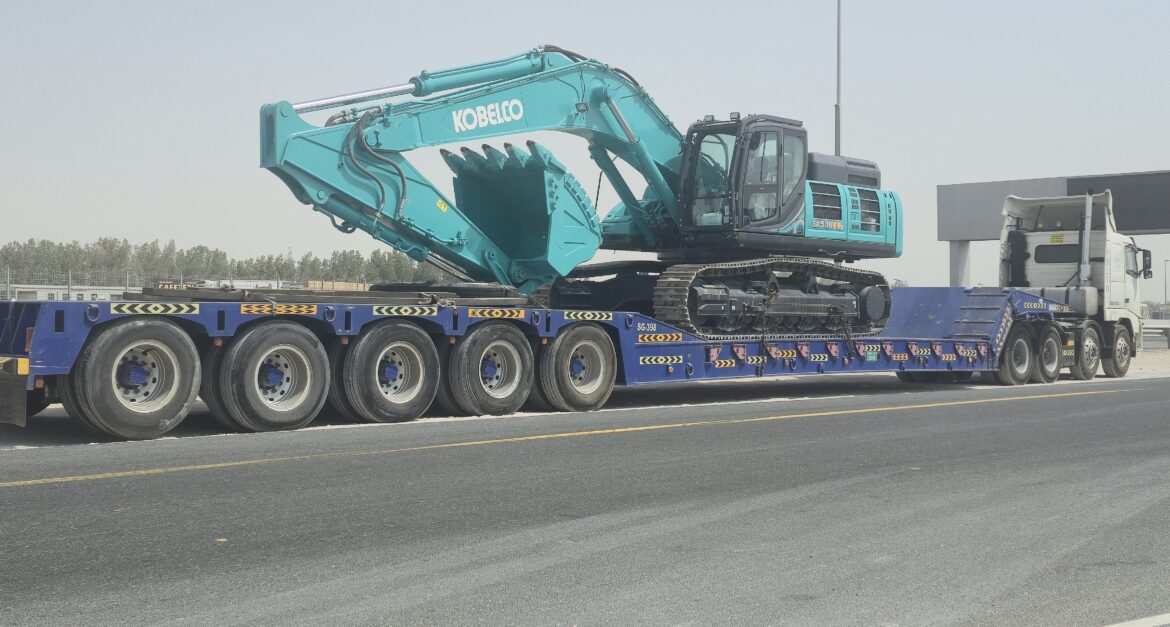
Planning large delivery Dubai | Truck Capacity & Routes
Planning large delivery Dubai involves more than picking a truck size off a list. Cargo weight, dimensions, loading requirements, site access, road restrictions, and the number of trips all shape whether a delivery goes smoothly or turns into a delayed, rescheduled mess. A truck’s advertised tonnage tells you almost nothing about whether it can actually take your shipment in one safe, legal load.
This guide walks through how to assess a large shipment, match it to a suitable truck capacity, plan the loading, check the route, and work out whether one trip is realistic or whether splitting the load makes more sense.
How to Plan Large Deliveries in Dubai
The process runs in a fixed order for a reason: cargo first, then capacity, then loading, then access, then route, then trips. Skipping ahead to “which truck” before you’ve actually measured the cargo is the single most common planning mistake, and it’s what causes vehicles to arrive and turn out to be the wrong fit.
1. Check Your Cargo Before Choosing a Truck
Start with three numbers: weight, dimensions, and volume.
Cargo weight. Calculate the total weight of the shipment, and separately flag any unusually heavy individual items — a single 400 kg machine changes the loading plan even if the total shipment weight is well within a truck’s rated capacity. Don’t assume a truck’s advertised tonnage equals its exact legal payload; check the specific vehicle’s permitted payload before loading.
Cargo dimensions. Measure length, width, height, pallet count, and the number of large or irregular items. A shipment can sit comfortably under the weight limit and still be too large for the available cargo space — bulky, lightweight goods run into this constantly.
Cargo type. Note whether you’re moving construction materials, machinery, furniture, warehouse stock, palletized goods, fragile items, or oversized pieces. The type changes how the load should be arranged, not just how much space it needs.
2. Compare Truck Capacity With Your Shipment
Choose a vehicle based on what you actually measured in step one — not the tonnage figure in an ad.
| Vehicle size | Suitable for | Key consideration |
|---|---|---|
| 1-ton | Small commercial loads, light deliveries | Limited cargo space |
| 3-ton | Medium-sized commercial deliveries | Balance of capacity and manoeuvrability |
| 5-ton | Larger stock, equipment and materials | Needs suitable loading access |
| 7-ton | Large commercial and heavier cargo | Check payload, dimensions and site access |
| 10-ton | Very large commercial or industrial loads | Greater space and access requirements |
Actual payload depends on the specific vehicle, its body configuration, and applicable regulations — treat this table as a starting point for narrowing options, not a guarantee of what any individual truck can carry.
Weight isn’t the only limit. Lightweight furniture or bulky retail stock can fill a cargo area before the truck gets anywhere near its weight capacity. For large deliveries, check payload, cargo volume, and cargo dimensions together — not payload alone.
3. Calculate How Many Trips You Need
A starting-point calculation:
Estimated trips = total cargo requirement ÷ practical vehicle capacity
But weight alone shouldn’t set the final number. Factor in cargo dimensions, available cargo space, weight distribution, loading arrangement, number of destinations, and delivery access. A shipment that divides cleanly on paper by weight can still fail to physically fit once you account for pallet shape or irregular items.
Example: a shipment that can’t be safely or practically loaded in one go gets split into planned batches — Trip 1, Trip 2, Trip 3 — organized by what’s needed where and when, not just by hitting a weight quota per load. Sorting the cargo into these batches before the truck arrives is what makes multiple trips manageable instead of chaotic.
4. Plan the Loading Arrangement
Efficient loading reduces delays and unnecessary re-handling.
- Load heavy items properly — position heavy goods appropriately and avoid concentrating weight in one area of the bed.
- Protect fragile cargo — keep it separated from heavy items and secured against movement in transit.
- Load by delivery order — for multi-stop routes, load what’s needed at the first stop so it can come off without disturbing the rest of the cargo.
- Secure the shipment — the method should match the cargo type; straps, netting, or dunnage all serve different jobs.
5. Check Access at Pickup and Delivery Locations
A vehicle can have plenty of capacity and still be the wrong choice if it can’t physically reach the site. Before dispatch, confirm:
- Entrance and gate size
- Road width and turning space
- Loading bay availability
- Warehouse or construction-site access
- Available unloading space
- Delivery time restrictions at the site itself
6. Plan the Delivery Route in Dubai
Route planning matters more for larger vehicles and multi-stop jobs, where a wrong turn or a banned corridor costs real time. Map the pickup and delivery points, sequence multiple stops logically, and build in time for loading and unloading—not just driving. Dubai also applies heavy-vehicle restrictions on certain roads and during certain hours: historically, RTA has classified restricted roads into three categories—a full 24-hour ban on some crossings, a longer daytime partial ban on others, and shorter intermittent peak-hour bans elsewhere in the city. Where a route can’t avoid a restricted road or time window, RTA’s Mobility Permit for Heavy Vehicles in Banned Times and Roads allows movement in limited, pre-approved cases.
These restrictions and their exact hours are reviewed and updated by RTA from time to time, so don’t plan a large delivery off an old blog post or a screenshot from a year ago—check the current restricted roads, times, and permit requirements on RTA’s own service pages before you dispatch a heavy vehicle.
7. When Are Multiple Trips Better?
Multiple trips can be the more practical option when
- The cargo is too heavy for one load
- The cargo is too bulky, even within the weight limit
- The vehicle can’t accommodate the cargo’s dimensions
- Goods are going to different locations
- The delivery site can’t accommodate a larger vehicle
- Splitting the load actually makes loading and unloading easier
The goal isn’t always the fewest possible trips—it’s a safe, practical delivery plan. Forcing everything into one load because it’s technically under the weight limit often costs more time in awkward loading and unloading than a second, well-organized trip would.
8. How to Avoid Unnecessary Trips
Better preparation cuts down on extra journeys:
- Group cargo by destination so each load matches a delivery point.
- Prepare the shipment in advance—packed, sorted, and ready before the vehicle arrives.
- Organize pallets and large items to use available space efficiently without compromising safe loading.
- Coordinate loading and unloading so the right people or equipment are on hand when the truck shows up.
9. Common Large-Delivery Planning Mistakes
- Choosing a truck by tonnage label alone
- Ignoring cargo dimensions in favor of weight only
- Underestimating cargo volume
- Poor weight distribution across the load
- Loading without considering delivery order
- Skipping a site-access check
- Leaving route planning until the last minute
- Assuming everything fits in one trip without measuring
- Working off outdated information about road restrictions
A Practical Checklist for Planning Large Deliveries in Dubai
Before dispatch, confirm: cargo weight, cargo dimensions, cargo volume, vehicle capacity, loading method, weight distribution, cargo securing, pickup access, delivery access, route, delivery window, and number of required trips.
When a 7-Ton Vehicle May Be Suitable
A 7-ton vehicle can be a good fit when a shipment needs more capacity than smaller vehicles can practically offer, but doesn’t call for a larger transport solution. The right call still comes down to the specific vehicle’s payload, dimensions, cargo requirements, and delivery access — not the tonnage label by itself. If your shipment fits that profile, our 7-ton pickup service in Dubai has the vehicle details and booking information.
Frequently Asked Questions
How do I calculate truck capacity for a large delivery?
Compare your cargo’s total weight, dimensions and volume against the vehicle’s actual payload and cargo space — not just its advertised tonnage. Weight and space are two separate limits, and either one can be reached first.
Is truck capacity based on weight or volume?
Both. A load can be well under the weight limit and still be too bulky for the cargo area, especially with lightweight items like furniture or retail stock. Check payload and cargo volume together.
How do I know what size truck I need?
Start with your cargo’s measured weight, dimensions and type, then match that against a vehicle’s real payload and space — not the tonnage label alone. Site access at pickup and delivery also affects which size is practical.
How many trips will a large delivery need?
A starting estimate is total cargo requirement divided by practical vehicle capacity, adjusted for dimensions, weight distribution, number of destinations and site access. The safest, most practical plan sometimes needs one more trip than the minimum calculation suggests.
How should heavy cargo be loaded for a large delivery?
Position heavy items to avoid concentrating weight in one area, keep fragile goods separated and secured, and load according to delivery order for multi-stop routes so the first stop’s cargo comes off without disturbing the rest.
Final Takeaway Of Haulier Transport Dubai
Successful large-delivery planning comes down to six things, in this order: Cargo → Capacity → Loading → Access → Route → Trips. Check each one before dispatch, and you’ll choose a more suitable vehicle, load it efficiently, and avoid delivery trips you didn’t actually need.
