
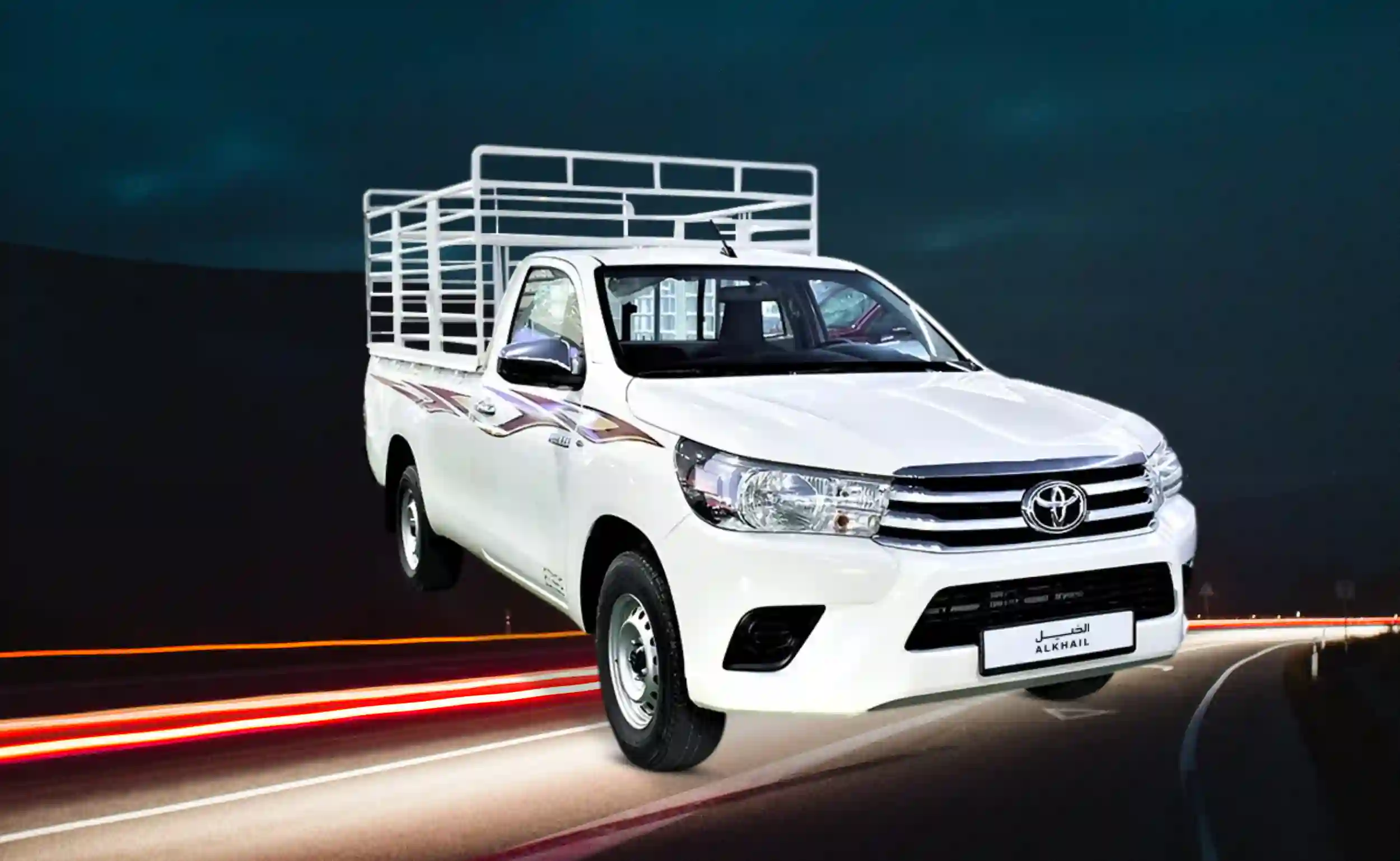
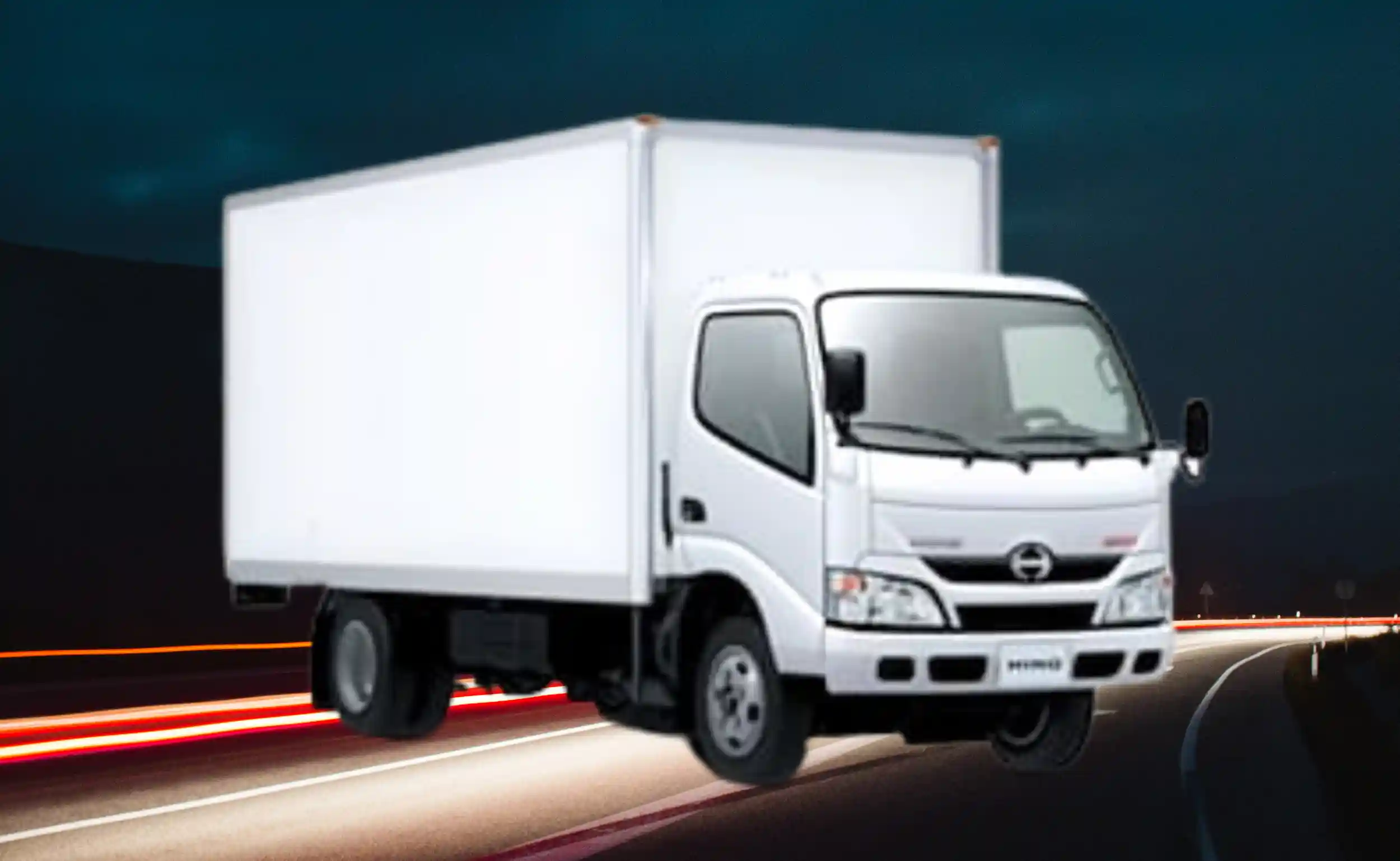
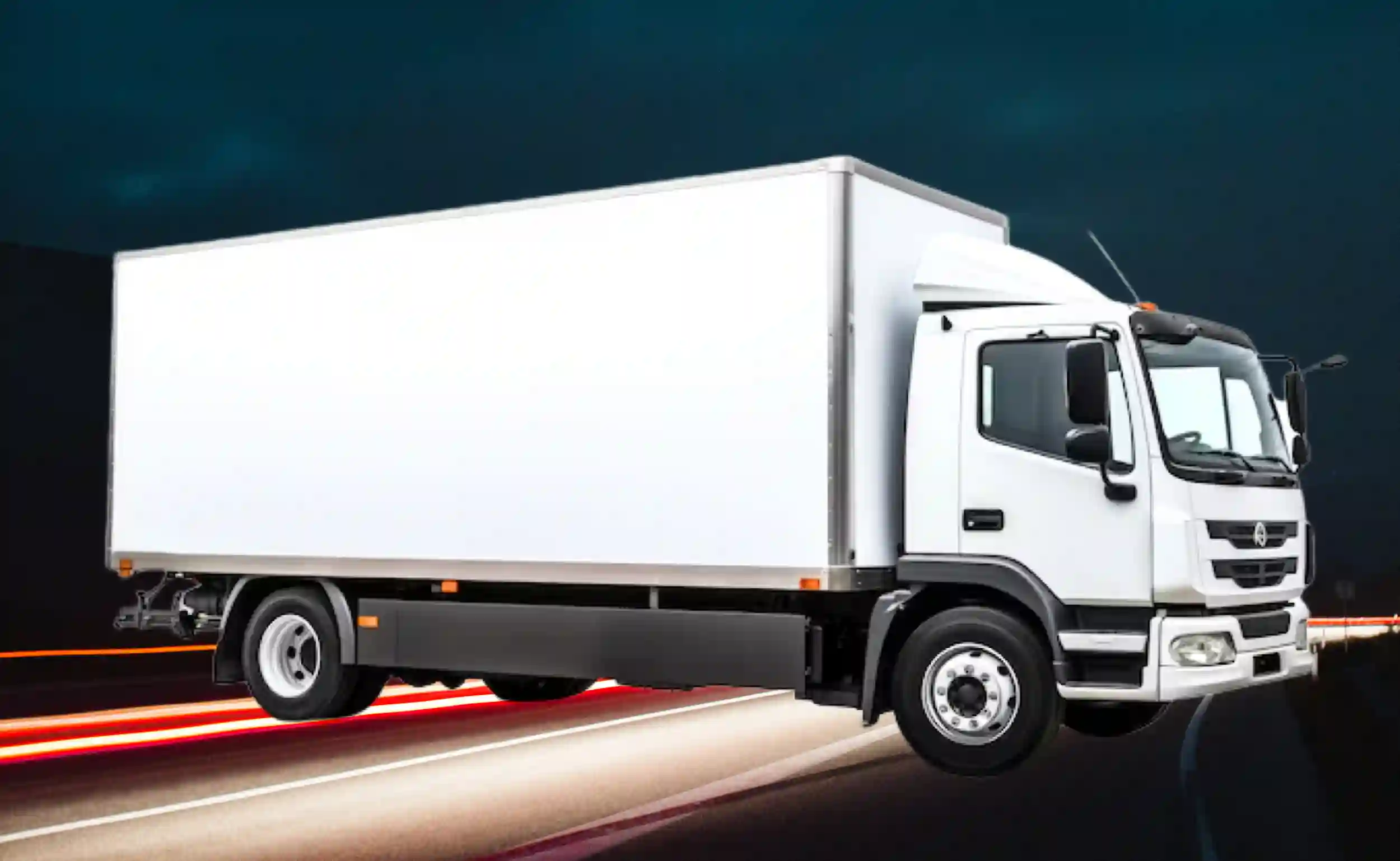
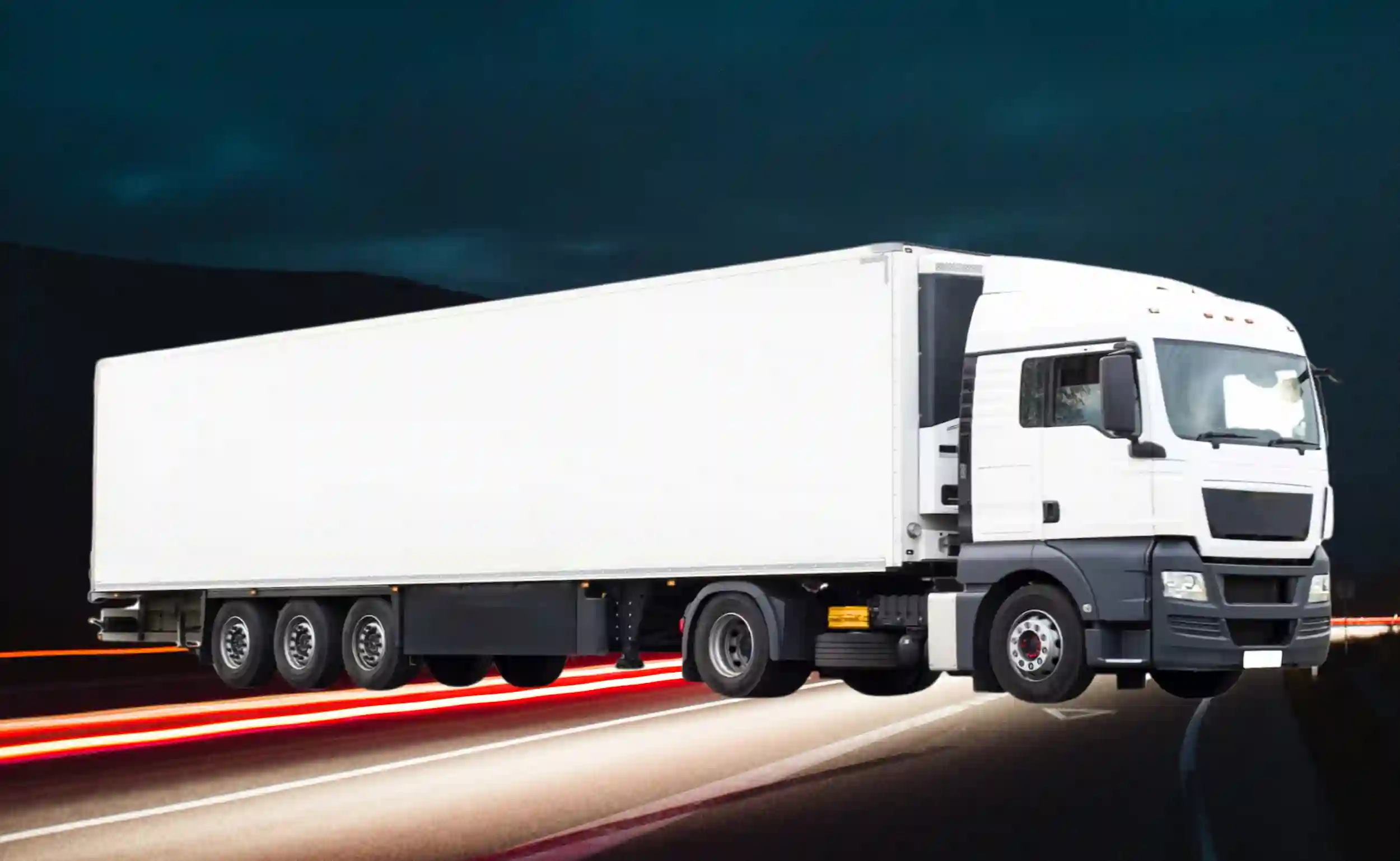


If you run a restaurant, cloud kitchen or catering business, your responsibility for the food does not end at the kitchen door. This guide explains the food transport requirements in Dubai in plain language: the temperature limits, how a vehicle has to be kept clean, and which records help you show that your food stayed safe from pickup to drop-off. It is written for restaurant owners, kitchen managers and supply teams who move food between suppliers, central kitchens, branches, and event sites.
What Are the Food Transport Requirements in Dubai?
Food in Dubai has to travel in vehicles and equipment that keep it at a safe temperature, stay clean, and protect it from contamination, and the business moving it has to be licensed for that activity. The Dubai Municipality guideline on food transportation and delivery vehicles sets the core temperature limits:
- Cold food at or below 5°C
- Frozen food at or below -18°C
- Hot food at or above 60°C
- Dry food at or below 30°C
Everything else in this guide builds on those four numbers: the vehicle you choose, how you load it, how often you check it, and what you write down.
Who Sets the Rules for Food Transport in Dubai?
Food safety in Dubai is overseen by the Food Safety Department of Dubai Municipality. Its guidelines and the Dubai Food Code are the main reference for how food must be stored, held and moved. The Roads and Transport Authority (RTA) deals with the vehicle side, such as registration and roadworthiness.
Dubai Municipality has also required vehicles that carry food to be approved before they are licensed for the road, with details such as vehicle capacity and temperature control specifications. Because approval steps can change, check the current process on the Dubai Municipality website or with the licensing authority before you set up or change a fleet.
Which Vehicles and Businesses Do the Rules Cover?
The guideline is wider than most people expect. It covers all kinds of vehicles used to transport or deliver food within Dubai, including trucks, cars and bikes, as well as vehicles used for online food orders. It applies to food establishments that own or rent these vehicles, and vehicle rental providers are expected to comply as well.
Two practical points follow from this:
- Renting does not remove your responsibility. If you hire a chiller van or refrigerated truck, the food is still yours. Ask the provider about the vehicle’s temperature range, cleaning routine and condition before the first delivery.
- Size does not matter. A bike carrying prepared meals and a 10 ton truck carrying pallets of chilled stock are both covered by the same principles.
Temperature Limits for Food Transport in Dubai
Different food needs different temperatures, so it helps to think in four groups.
| Food group | Limit during transport | Typical examples |
|---|---|---|
| Cold (chilled) | At or below 5°C | Dairy, raw meat, poultry, fish, cut produce, ready-to-eat cold meals |
| Frozen | At or below -18°C | Frozen meat and seafood, ice cream, frozen vegetables, frozen pastry |
| Hot | At or above 60°C | Cooked meals, catering trays, soups, grilled items |
| Dry | At or below 30°C | Rice, flour, canned goods, packaged and shelf-stable items |
The danger zone. Between 5°C and 60°C, bacteria such as Salmonella and Listeria multiply fastest. Cold food that warms up, or hot food that cools down, spends time in this range, and the longer it stays there the higher the risk.
A margin matters in Dubai. The limits are maximums, not targets. In summer heat, with doors opening at every stop, a load sitting right at 5°C has no room to spare. Many operators set their chiller a few degrees below the limit for that reason.
Do not forget dry goods. A closed, unventilated vehicle parked in the sun can go well above 30°C. Dry food is often treated as low risk, but heat still damages quality, packaging and shelf life.
Sources vary. You will see chilled ranges such as 0 to 4°C or +2 to +8°C on other websites. These are often operating ranges chosen by the transport company. For compliance, use the Dubai Municipality limits and confirm anything unusual with your food safety officer.
Vehicle Cleanliness and Hygiene Requirements
Temperature is only half of it. The vehicle itself has to be clean and suitable for food. The Dubai Municipality guideline expects the inside and outside of the food holding unit to be kept clean at all times. Before food is loaded, surfaces should be thoroughly cleaned and disinfected using a cleaning and disinfecting agent approved by Dubai Municipality.
In practice that means:
- Clean between loads, especially after raw meat, fish or strong-smelling items.
- Use approved products, and avoid leaving chemical residue or smell in the cargo area.
- Pre-cool the vehicle before loading chilled or frozen food, so the first crates do not have to cool the whole compartment.
- Keep the cargo area free of non-food items, tools, cleaning supplies and packaging waste.
- Check seals, floors and walls. Damaged insulation, cracked door seals and dirty drains cause both temperature loss and hygiene problems.
Protecting Food From Contamination During Delivery
The guideline also expects food to be kept in ways that prevent contamination from insects, dust, fumes, sunlight, rain and other adverse factors while it is being delivered.
For restaurants, the day-to-day habits are simple:
- Keep raw and ready-to-eat food separated, with raw items lower and sealed.
- Use closed, food-grade containers with lids rather than open trays.
- Keep hot and cold food in separate compartments or insulated boxes.
- Load in the order of delivery, so the doors are not open longer than needed at each stop.
- Protect loading and unloading points from direct sun, and do not leave a loaded vehicle idling at a kerb longer than necessary.
The guideline also covers how long food may stay in a delivery vehicle, particularly for ready-to-eat food delivered to customers. Read the current wording of that section for your type of operation.
Temperature Records and Documentation
A vehicle that works properly is one thing. Being able to show that it worked is another. Records are how a restaurant proves that a load stayed within its limits, and they are a core part of any HACCP-based food safety system.
Useful records to keep for each delivery:
- Temperature of the cargo area at loading, at each stop where practical, and on arrival
- Core temperature checks for high-risk items such as meat, poultry, seafood and dairy
- Time of loading, departure and arrival
- Vehicle cleaning and disinfection record
- Vehicle and driver details for each run
- Any issue, such as a door left open, a delay or a rejected item, and what was done about it
Exactly which records must be kept, and for how long, depends on your licence and your food safety plan. Confirm this with your food safety officer or Dubai Municipality. Even where a record is not mandatory, it protects you if a supplier, client or inspector questions a delivery.
Moving Food From a Central Kitchen to Branches
Central kitchens make food safety easier in some ways, because production is controlled, and harder in others, because the food now has to travel to several places on a schedule. The food transport requirements in Dubai do not change just because the food is moving between your own kitchen and your own branches. The same temperature limits, hygiene rules and records apply, and a multi-stop route adds extra risk because doors open at every branch.
Points that matter for this kind of route:
- Cool or heat food properly before loading. A vehicle can hold temperature, but it is not designed to bring warm food down to a safe level.
- Separate hot, chilled and frozen items and plan them into the vehicle before the route starts.
- Sequence the drops so the most sensitive items are delivered earliest, where possible.
- Choose the vehicle around the whole route, including total volume, number of stops and time between them.
If you would rather have a chiller or refrigerated vehicle planned around a route like this, see food transport for restaurants in Dubai.
Common Compliance Mistakes Restaurants Make
These come up again and again, and most are easy to fix:
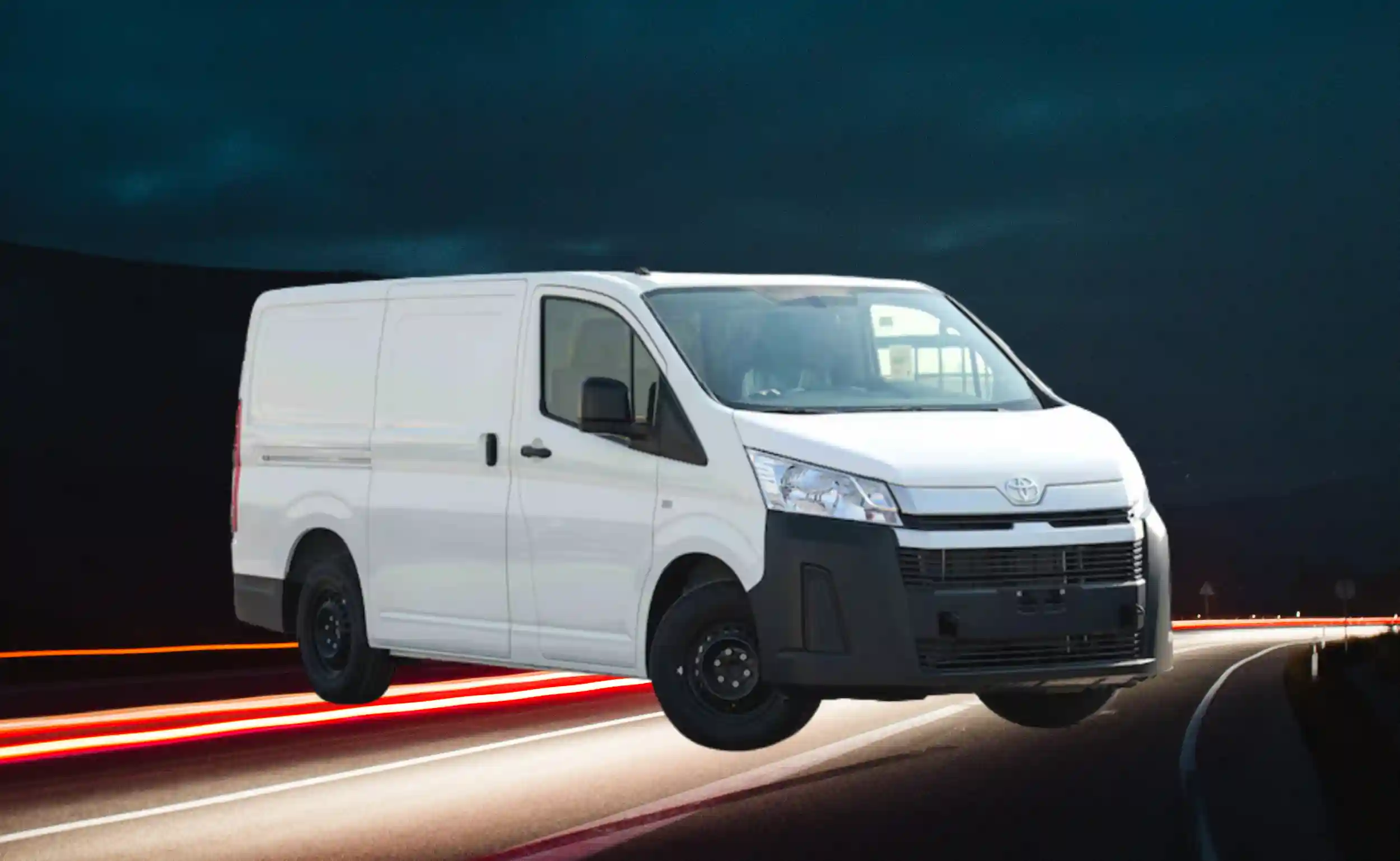
- Using an ordinary van for chilled food and relying on shade or ice packs.
- Loading before the vehicle has cooled, so the first part of the journey is spent recovering temperature.
- Mixing raw and ready-to-eat items in the same crate or compartment.
- Not checking temperature on arrival, so a problem is only found by the customer or branch.
- Skipping cleaning between loads because the schedule is tight.
- Overpacking the vehicle, which blocks airflow around the cargo.
- Assuming a rented vehicle is compliant without asking.
- Keeping no records, so there is no way to show what happened.
- Forgetting dry goods in summer heat.
Food Transport Compliance Checklist
| Stage | What to check |
|---|---|
| Before loading | Vehicle cleaned and disinfected with an approved agent; cargo area free of non-food items; refrigeration or heating unit running and pre-conditioned; correct temperature set for the food type |
| At loading | Food already at the right temperature; raw and ready-to-eat separated; hot, chilled and frozen kept apart; containers closed and food-grade; load arranged in delivery order; temperature and time recorded |
| During transport | Doors opened only when needed; temperature monitored; food protected from sun, dust and rain; route planned to limit time in transit |
| On arrival | Temperature checked before unloading; item quality checked; unloading done promptly; any problem recorded |
| After the run | Records filed; vehicle cleaned; issues reported and corrected |
Frequently Asked Questions
What are the main rules for transporting food in Dubai?
Food must be kept at a safe temperature, transported in a clean vehicle, and protected from contamination. Dubai Municipality sets limits of 5°C or below for cold food, -18°C or below for frozen food, 60°C or above for hot food and 30°C or below for dry food.
What temperature must chilled food be kept at during transport?
Cold food should be kept at or below 5°C under the Dubai Municipality guideline. Because door openings and heat push temperatures up, many operators run their chiller a few degrees below that.
What temperature must frozen food be transported at?
Frozen food should stay at or below -18°C for the whole journey, including loading and unloading.
Do restaurants need refrigerated transport for chilled food?
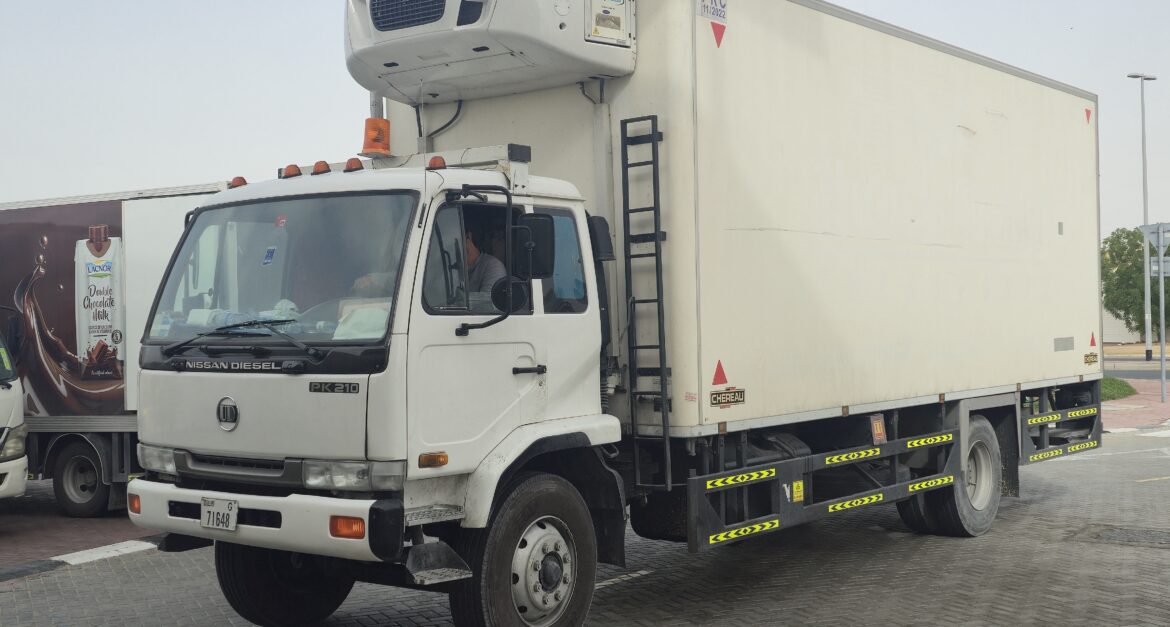
Chilled food has to stay at or below 5°C, and an ordinary van cannot reliably do that in Dubai’s heat. A chiller van or refrigerated truck is built for the job, so it is the practical choice for most chilled loads.
Do the rules apply if I rent the vehicle?
Yes. The guideline covers food establishments that own or rent vehicles, and vehicle rental providers are expected to comply too. Ask about the vehicle’s temperature range, cleaning routine and condition before you hire.
How should a food transport vehicle be cleaned before loading?
The inside and outside of the food holding unit should be thoroughly cleaned and disinfected before loading, using a cleaning and disinfecting agent approved by Dubai Municipality.
Do I need to keep temperature records?
Records are how you show that food stayed within its limits, and they are part of HACCP-based food safety. Confirm exactly what your licence and food safety plan require with your food safety officer or Dubai Municipality.
Final Thoughts
Understanding the food transport requirements in Dubai comes down to three habits: keep every load inside its temperature limit, keep the vehicle clean and suitable for food, and keep simple records that prove both. Restaurants that build these into their routine avoid rejected deliveries, wasted stock and problems at inspection. If you need a chiller or refrigerated vehicle for supplier runs, central kitchen distribution or multi-branch deliveries, Haulier Transport operates from Ras Al Khor and can help you choose the right size and schedule. Start with our restaurant food transport service in Dubai.
