


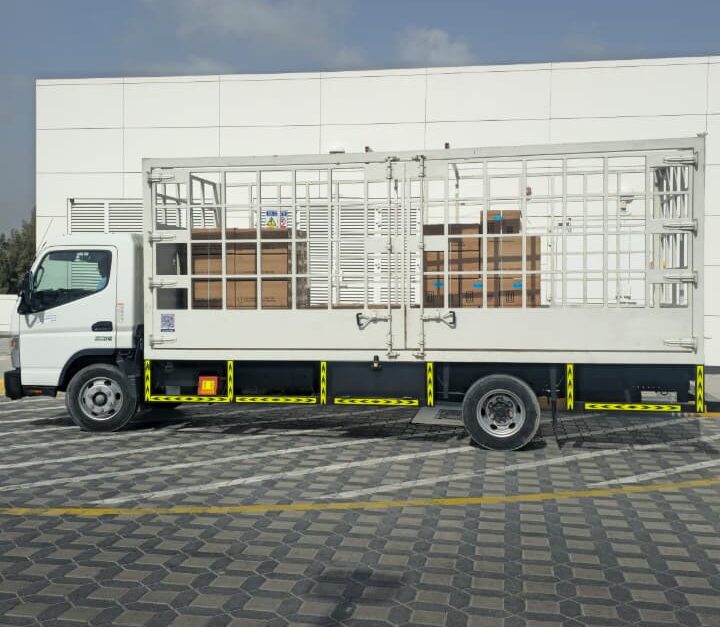
Dubai Commercial Truck Guide | Which Vehicle Does Your Business Need?
Choosing a commercial vehicle for a business in Dubai is not simply a matter of picking the biggest truck available. The right choice depends on what you carry, how much it weighs, how often you move it, where you deliver it, and how easily the vehicle can handle your daily routes. Dubai Commercial Truck Guide | Which Vehicle Does Your Business Need? This guide explains how to match your business requirements with the right type and size of commercial truck. Whether you handle retail deliveries, construction materials, warehouse stock, furniture, equipment, or temperature-sensitive goods, the goal is the same: choose enough capacity to do the job efficiently without paying for more truck than you actually need.
What Should You Consider Before Choosing a Commercial Truck in Dubai?
Before comparing truck sizes, start with your actual operation. A vehicle that works perfectly for a construction supplier may be unnecessary for a small retail distributor.
The most important factors are:
- The type of cargo you transport
- Average and maximum cargo weight
- Cargo dimensions and volume
- Number of deliveries per day
- Distance travelled
- Dubai city or inter-emirate routes
- Loading and unloading requirements
- Whether cargo needs protection from weather
- Whether goods require temperature control
- Your expected rental or ownership budget
- Whether you need a driver included or plan to self-drive
- How your transportation needs may change as the business grows
Select the vehicle according to the job, not simply according to its maximum capacity.
What Are You Transporting?
Start by identifying your cargo. Small parcels and cartons need a very different vehicle from construction materials, machinery, furniture, or bulk stock. The physical characteristics of the load also influence the body type you need.
- General cartons work well with an enclosed body.
- Building materials often require an open or flatbed configuration.
- Furniture needs additional space and protection from scratching or weather.
- Machinery requires a body and loading arrangement suited to its shape and weight.
- Frozen or chilled products need temperature-controlled transportation.
The vehicle’s body style can be just as important as its payload capacity.
How Much Does Your Cargo Weigh?
Payload is one of the most important considerations when choosing a commercial truck. Don’t estimate your requirements only from your average shipment—factor in your heaviest regular load as well. A consistently overloaded vehicle creates operational, safety, maintenance, and compliance problems. At the same time, a much larger vehicle than necessary increases operating costs without a real business benefit.
Where Will the Truck Operate?
Dubai has a mixture of dense urban areas, industrial zones, warehouses, construction sites, and major highways — areas like Al Quoz, Ras Al Khor, Jebel Ali (JAFZA), and Dubai Investment Park all have different loading, access, and traffic conditions. Your routes influence the most practical vehicle.
A truck used for frequent city deliveries needs to prioritize maneuverability and efficient loading. A vehicle used for larger warehouse transfers places greater emphasis on payload and cargo volume. If your business regularly moves goods between Dubai and other emirates, route distance and highway use become additional considerations—covered in more detail later in this guide.
What Type of Commercial Vehicle Does Your Business Need?
There is no single commercial vehicle that suits every business. Different body styles are built around different cargo and operational requirements.
Pickup Trucks for Flexible Commercial Loads
Pickup trucks suit businesses that need an open cargo area and flexible access to materials or equipment: construction supplies, tools, maintenance work, landscaping materials, and smaller loads that need frequent loading and unloading. The open cargo area makes certain types of work easier, particularly where goods don’t require an enclosed environment.
Box Trucks for Protected Cargo
Box-style trucks protect goods from weather, dust, and exposure during transportation. They work well for retail stock, furniture, appliances, office equipment, and e-commerce deliveries. For businesses delivering directly to customers, an enclosed cargo area also makes organizing and protecting shipments easier.
Flatbed Trucks for Oversized or Difficult Loads
Flatbed configurations suit cargo that’s difficult to place inside an enclosed body—construction materials, machinery, industrial equipment, long materials, and large commercial items. The key advantage is loading flexibility, though appropriate securing still needs to be considered for the cargo being moved.
Refrigerated Vehicles for Temperature-Sensitive Goods
Businesses transporting food, beverages, pharmaceuticals, flowers, or other temperature-sensitive products need a refrigerated or chilled vehicle. For these businesses, vehicle selection isn’t only about payload — maintaining the appropriate cargo environment throughout the journey matters just as much.
Which Truck Size Is Right for Your Business?
Truck size should be considered alongside payload, cargo volume, route requirements, and delivery frequency.
| Truck category | Generally suitable for | Typical load example |
|---|---|---|
| 1-ton | Light commercial deliveries and smaller loads | 10–15 medium boxes, small appliance runs, café or florist stock |
| 3-ton | Regular business deliveries and medium loads | 30–40 boxes, office furniture, retail restock |
| 5-ton | Larger distribution and heavier commercial cargo | Bulk retail stock, multiple furniture sets |
| 7-ton | Bulk deliveries, construction and warehouse movement | Palletized construction materials, warehouse-to-site transfers |
| 10-ton | Heavy commercial and high-capacity transportation | Large machinery, high-volume bulk cargo |
| 40-ft trailer | Large-volume freight and major logistics operations | Full-container loads |
These categories are useful for planning, but actual usable payload depends on the specific vehicle, body configuration, cargo dimensions, and operating requirements.
When Does a 1-Ton Truck Make Sense?
A 1-ton vehicle works well when your business mainly handles lighter cargo and frequent local deliveries — small distributors, service businesses, retailers, and businesses transporting tools or smaller quantities of stock. If your loads regularly exceed its practical capacity, using a smaller vehicle simply because it’s cheaper results in additional trips and higher overall transportation costs.
When Is a 3-Ton Truck a Better Choice?
A 3-ton truck is a useful middle ground for businesses that have outgrown smaller commercial vehicles but don’t regularly need heavy-duty capacity—retail distribution, e-commerce operations, furniture deliveries, warehouse transfers, and building supply deliveries. The right choice depends on both the weight and physical volume of your cargo.
When Should You Consider a 7-Ton Truck?
A 7-ton vehicle becomes relevant when your business regularly handles heavier or larger commercial loads: construction materials, warehouse movement, bulk stock, and larger furniture loads. If a smaller vehicle forces your team into several trips for the same job, moving to a 7-ton pickup can improve the efficiency of the operation — for businesses that regularly need this level of capacity, dispatching one larger vehicle instead of repeat runs in a smaller truck is usually the more efficient route.
When Do You Need a 10-Ton Truck?
A 10-ton truck fits businesses that consistently handle heavy commercial cargo exceeding the practical capacity of smaller vehicles — larger industrial loads, substantial warehouse movements, heavy construction materials, and high-volume transportation. Bigger isn’t automatically better, though: if your regular cargo doesn’t justify the additional capacity, a smaller vehicle is more efficient.
What Truck Does Your Business Need?
The best vehicle often becomes clearer when you start with your business rather than the truck.
For E-Commerce and Last-Mile Delivery
E-commerce businesses deal with numerous individual shipments rather than one large load. What matters most: cargo organization, number of deliveries, loading efficiency, urban maneuverability, and protection of customer orders. A smaller or medium commercial vehicle is often practical when individual shipments are relatively light.
For Retail and Wholesale Distribution
Retailers and wholesalers move cartons, stock, displays, appliances, or merchandise between warehouses, suppliers, and stores. The right size depends heavily on shipment frequency and average load weight — a vehicle that can handle the usual delivery in one trip reduces unnecessary repeat journeys.
For Construction Companies
Construction businesses have very different transportation requirements from retail businesses. Materials can include building supplies, tools, equipment, metal products, timber, site materials, and machinery. An open-body or flatbed configuration suits some loads, while heavier operations need greater truck capacity. For larger construction deliveries, a 7-ton pickup rental is worth considering once smaller vehicles are no longer practical for the regular workload.
For Furniture and Moving Businesses
Furniture and moving companies need to weigh both weight and volume. A sofa doesn’t weigh much next to construction equipment, but it can eat up as much cargo space as several appliances combined — household moves often involve many different items that need to be loaded efficiently. Cargo volume, body dimensions, loading access, and protection matter just as much as payload here.
For Warehouses and Logistics Businesses
Warehouse operations involve repetitive transportation, which makes vehicle utilization particularly important. Ask: How much stock moves per trip? How many trips are required each day? What’s the average load? Are deliveries local or inter-emirate? How quickly must goods move? A truck running regularly below capacity points to a smaller vehicle being sufficient; a team repeatedly needing extra trips points to a larger vehicle being more economical.
For Food and Catering Businesses
Food businesses have additional requirements depending on the products being transported. Dry goods, packaged food, fresh produce, chilled products, and frozen goods may all need different transportation solutions. Temperature-sensitive cargo should be matched with an appropriate refrigerated or chilled vehicle rather than selected based on weight alone.
1-Ton vs 3-Ton vs 7-Ton vs 10-Ton: How Do You Decide?
The easiest way to compare truck capacities is to look at the relationship between load size and trip frequency. A smaller vehicle is perfectly suitable if your loads are light. But if the same business regularly has to make several trips because its vehicle can’t carry the required load, the apparent saving from using a smaller truck disappears fast.
Ask yourself:
- What is the heaviest load you regularly transport?
- What is the physical volume of the load?
- How many deliveries do you make each day?
- Could one larger vehicle complete a job that currently requires multiple trips?
- Are your routes mainly within Dubai or between emirates?
- Do you need an enclosed, open, flatbed, or refrigerated body?
- How often will the vehicle be used?
This is ultimately about matching capacity to actual utilization, not choosing a truck simply because it has the highest payload.
City Deliveries vs Inter-Emirate Transportation
Dubai city deliveries involve tight access points, repeated stops, loading zones, and busy roads across areas like Al Quoz, Ras Al Khor, and Dubai Investment Park. Maneuverability, loading efficiency, and practical cargo capacity matter most here.
Inter-emirate transportation places greater emphasis on payload, cargo protection, vehicle reliability, and operational efficiency. A business moving larger loads between Dubai, Abu Dhabi, Sharjah, Ajman, or other emirates needs a different transportation strategy from a business completing short local deliveries.
Should You Rent or Buy a Commercial Truck?
The right decision depends on utilization — and on the total cost of running the vehicle, not just the upfront number.
Renting makes sense when:
- Your demand changes seasonally
- You only need additional capacity occasionally
- You have short-term projects
- You’re testing a new delivery operation
- You want to avoid a large upfront vehicle investment
- Your existing fleet can’t handle temporary increases in demand
- You’d rather have a driver included than manage one yourself
Buying makes sense when:
- The truck is needed almost every day
- Your transportation workload is predictable
- The vehicle stays highly utilized
- You need a dedicated vehicle for a long-term operation
- Ownership makes financial sense over the expected service period, once maintenance, insurance, and downtime are factored in
For many businesses, the practical answer is a combination: owned vehicles for predictable daily work, plus rented capacity — with or without a driver — during peak periods.
How Can You Avoid Choosing the Wrong Truck?
One of the most common mistakes is choosing based only on the advertised truck capacity or rental price. Consider the complete operating picture instead.
- Don’t underestimate payload. Your regular cargo should comfortably fit within the vehicle’s appropriate capacity.
- Don’t pay for unused capacity. A very large truck isn’t more economical if most trips carry small loads.
- Consider cargo volume, not just weight. A load can be relatively light but still take up substantial space.
- Think about delivery frequency. If a smaller truck requires multiple trips, compare total operating cost and time, not just the price of one vehicle.
- Match the body to the cargo. A flatbed, pickup, enclosed body, and refrigerated vehicle serve different purposes.
- Plan for growth. If your business is expanding quickly, today’s perfect vehicle may be too small within a short period.
Commercial Truck Selection Checklist for Dubai Businesses
Before selecting a vehicle, write down:
- Average cargo weight
- Maximum regular cargo weight
- Cargo dimensions
- Number of deliveries per day
- Average route distance
- City or inter-emirate operation
- Loading and unloading method
- Required cargo protection
- Temperature requirements
- Frequency of vehicle use
- Expected seasonal demand
- Rental or ownership budget, and whether you need a driver included
- Future transportation requirements
Once these points are clear, comparing vehicle sizes becomes much easier.
Q1: Which commercial truck is best for a small business in Dubai?
It depends on the business’s cargo, weight, delivery frequency, and route. Smaller businesses with light loads may not need a high-capacity truck, while businesses handling bulky or heavy goods can benefit from a larger vehicle.
Q2: What truck is best for construction materials?
It depends on the type and weight of the materials. Open-body, flatbed, and higher-capacity trucks suit different construction loads.
Q3: Is a 3-ton truck enough for business deliveries?
Often, yes — particularly for medium-weight commercial deliveries. The key question is whether your typical cargo can be transported efficiently without exceeding the vehicle’s appropriate capacity.
Q4: When should a business choose a 7-ton truck?
When regular loads are too large or heavy for smaller trucks, or when repeated trips are reducing delivery efficiency.
Q5: What is the difference between a 7-ton and 10-ton truck?
The key difference is available capacity and the type of workload each vehicle is intended to handle. The better choice depends on your actual cargo requirements, not simply picking the larger option.
Q6: Is renting a commercial truck better than buying one?
Neither is universally better. Renting suits variable or occasional demand and lets you add a driver without hiring one yourself. Buying suits businesses with consistent, high vehicle utilization, where ownership costs even out over time compared to ongoing rental fees.
Q7: What truck is suitable for warehouse transportation?
It depends on the volume and weight of the stock being moved, loading conditions, and delivery frequency. Businesses moving large quantities often benefit from higher-capacity vehicles.
Q8: How do I calculate the truck capacity my business needs?
Start with the heaviest regular load, cargo dimensions, and number of trips required. Then compare those requirements against the actual specifications and operating limitations of the vehicle you’re considering.
Final Takeaway
Choosing a commercial vehicle in Dubai should begin with your business requirements, not with a truck’s size or advertised capacity. Think about what you carry, how much it weighs, how much space it occupies, how often you move it, and where it needs to go. Then select the body type and capacity that completes the job efficiently.
For light deliveries, a smaller vehicle may be enough. For regular warehouse construction, furniture, or bulk transportation, a higher-capacity truck reduces unnecessary trips and improves operational efficiency. It isn’t about finding the biggest truck — it’s about finding the vehicle that gives you the right balance of capacity, practicality, route suitability, and operating efficiency for your business.
