


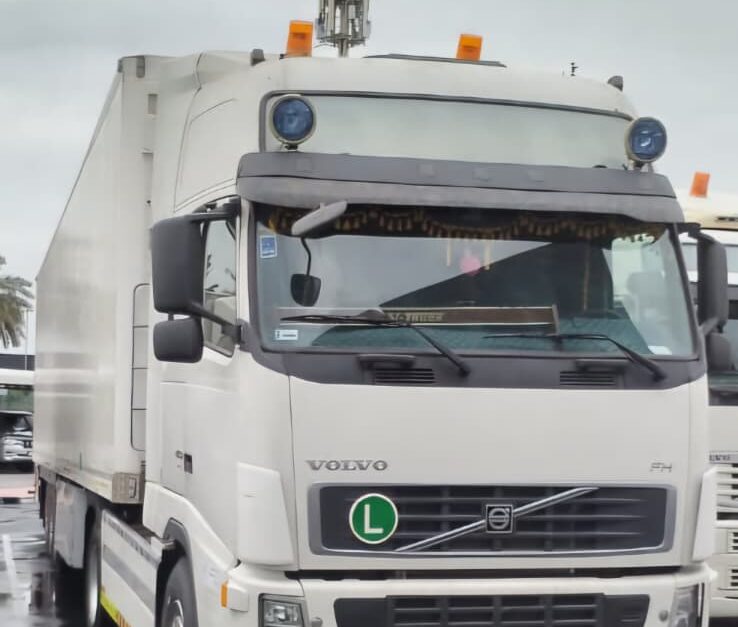
40 Ft Trailer Dimensions, Weight & Load Capacity: Complete Guide
When you are moving large, heavy, or high-volume cargo, choosing the right trailer is about more than finding a vehicle with enough space. The trailer’s dimensions, payload, deck height, axle configuration, loading method, and the type of cargo all need to work together. A 40 ft trailer is a common choice for businesses transporting construction materials, industrial equipment, machinery, commercial goods, and other large loads. However, the term 40 ft trailer does not describe one single specification. Different trailer types can have different dimensions, tare weights, payload ratings, and loading capabilities.
That distinction matters when planning transport in Dubai and across the UAE. This guide explains what you should know about 40 ft trailer dimensions, weight, load capacity, trailer types, and the factors that should be considered before booking one.
What Is a 40 Ft Trailer?
A 40 ft trailer is a large road trailer designed to transport substantial quantities of cargo. Depending on the configuration, it may be used for general freight, construction materials, machinery, industrial equipment, warehouse cargo, containers, or oversized loads.
The 40 ft generally refers to the approximate length of the trailer or its loading deck. It does not, by itself, tell you how much weight the trailer can legally carry. For example, a 40 ft flatbed and a 40 ft low-bed trailer may both be approximately the same length, but they serve different transportation requirements. This is why the cargo should always be assessed before selecting the trailer.
40 Ft Trailer Dimensions at a Glance
Exact dimensions vary according to the trailer manufacturer, design, axle configuration, and intended application. As a general reference, a typical 40 ft flatbed may have dimensions around the following:
| Specification | Typical measurement |
|---|---|
| Length | Approximately 40 ft / 12.2–12.5 m |
| Width | Around 2.5 m |
| Loading length | Approximately 40 ft, depending on design |
| Deck height | Depends on trailer configuration |
| Payload | Depends on trailer and vehicle configuration |
These figures should be treated as general guidance rather than the exact specification of every 40 ft trailer. Published trailer specifications can differ considerably in both tare weight and payload capacity.
40 Ft Trailer Dimensions in Feet and Meters
For cargo planning, it helps to understand the dimensions in both feet and metric measurements.
Length
A 40 ft trailer is approximately 12.2 metres long. Some trailer designs may have slightly different overall or usable loading lengths.
Width
A typical flatbed trailer is around 2.5 metres wide, although the actual usable loading width should be confirmed for the specific trailer.
Height
Height requires more attention because there are several measurements to consider.
The trailer’s deck height is different from the overall height of the loaded vehicle. If you are transporting tall machinery or equipment, the height of the cargo needs to be considered together with the trailer deck. A load that fits comfortably in length may still create a problem because of its overall height.
How Much Does a 40 Ft Trailer Weigh?
The empty weight of a trailer is commonly referred to as its tare weight. There is no single tare-weight figure for every 40 ft trailer. Trailer construction, axle count, suspension, deck design, and additional equipment can all affect its empty weight.
Published specifications for different 40 ft flatbed designs, for example, show tare weights in a broad range rather than one universal number. This is important because the trailer itself contributes to the total vehicle weight. A trailer’s empty weight should therefore be considered before calculating how much cargo can be carried.
Tare Weight, Payload and Gross Weight Explained
These three terms are often confused when people are comparing trailer specifications.
Tare Weight
Tare weight is the weight of the empty trailer.
Payload
Payload is the weight of the cargo being transported.
Gross Weight
Gross weight refers to the total loaded weight of the relevant vehicle or vehicle combination.
In simple terms:
Gross weight = vehicle/trailer weight + cargo weight
However, calculating a practical payload is not simply a matter of subtracting the trailer’s empty weight from a maximum number. The tractor, trailer configuration, axle ratings, route restrictions, and applicable regulations also need to be considered.
How Much Weight Can a 40 Ft Trailer Carry?
This is one of the most common questions about 40 ft trailers, but there is no single payload figure that applies to every trailer. The actual carrying capability can depend on:
- Trailer construction
- Number and rating of axles
- Tractor configuration
- Trailer tare weight
- Cargo distribution
- Road restrictions
- Applicable weight regulations
- Whether special transport arrangements are required
One manufacturer’s 40 ft heavy-duty trailer may have a very different technical payload rating from another trailer. More importantly, a trailer’s structural capacity is not automatically the same as the legally permitted road load for every journey. For a real transport booking, the cargo weight should be checked against the actual tractor-trailer combination and the requirements of the planned route.
Why Axle Distribution Matters
Cargo weight is only one part of safe and practical loading. Consider a heavy machine placed too far toward one end of a trailer. The total weight might appear acceptable, but the distribution could place excessive load on a particular axle. Poor weight distribution can affect:
- Vehicle stability
- Braking
- Tyre loading
- Axle loads
- Trailer handling
- Cargo security
- Road safety
For heavy machinery and concentrated loads, where the cargo sits on the trailer can be almost as important as how much it weighs. This is one of the reasons experienced transport planning starts with the actual cargo rather than simply choosing the largest available trailer.
What Can You Transport on a 40 Ft Trailer?
A 40 ft trailer can be suitable for a wide range of commercial and industrial loads when the cargo matches the trailer configuration.
Construction Materials
Large construction materials, structural components, steel products, and other bulky loads can often be transported using suitable open-deck trailer configurations.
Industrial Machinery
Factories and industrial businesses may require trailers for moving production equipment, generators, machinery, and other large assets.
Heavy Equipment
Construction and industrial equipment may require a flatbed, low-bed, or another specialized trailer depending on its dimensions, weight, and ground clearance.
Warehouse and Commercial Cargo
A 40 ft trailer can provide considerable loading space for warehouse movements, commercial freight, and large business deliveries.
Containers
Certain trailer configurations are designed to carry containers. The appropriate trailer or chassis should be confirmed according to the container and transport requirements.
Oversized Cargo
Large or irregularly shaped cargo may require specialized equipment, route planning, or additional permissions. A 40 ft length alone does not determine whether a load qualifies as oversized.
Types of 40 Ft Trailers
Not every 40 ft trailer is designed for the same type of cargo.
40 Ft Flatbed Trailer
A flatbed trailer provides an open loading deck without fixed side walls. This makes it useful for cargo that may need loading from the side, rear, or above, including construction materials, machinery, and bulky equipment. Haulier Transport includes flatbed trailers in its fleet for transporting machinery, materials, and other large cargo.
40 Ft Curtain-Side Trailer
Curtain-side trailers use flexible side curtains that can be opened to provide convenient loading access. They can be suitable for general commercial freight and cargo that benefits from greater protection than an open flatbed can provide.
40 Ft Low-Bed or Low-Loader Trailer
A low-bed trailer has a lower loading deck than a conventional flatbed. This can be particularly useful for tall or heavy machinery because reducing the deck height can help manage the overall height of the loaded vehicle. For machinery transport, the right choice may therefore be a low-bed rather than simply a standard 40 ft flatbed.
40 Ft Trailer vs 40 Ft Container
A 40 ft trailer and a 40 ft container are not the same thing.
A 40 ft container is a standardized cargo container.
A 40 ft trailer is road-transport equipment used to carry cargo.
Some trailers are designed specifically to transport containers, but not every 40 ft trailer is a container chassis. Understanding this difference is important when arranging transportation because the type of cargo determines the equipment required.
40 Ft Trailer Loading: Weight Is Not the Only Consideration
Before loading a large shipment, four basic questions should be answered:
- How long is the cargo?
- How wide is it?
- How high is it once loaded?
- How much does it weigh?
For machinery and other concentrated loads, additional information can be important:
- Where is the centre of gravity?
- Where are the lifting points?
- Can the cargo be loaded by crane or forklift?
- How will it be secured?
- Does the load require special securing equipment?
- Could the cargo create an unusual axle distribution?
Providing this information before the vehicle arrives can help prevent avoidable loading problems.
How to Choose the Right 40 Ft Trailer
The best trailer is not necessarily the largest one. It is the trailer that matches the cargo and the transport conditions.
1. Measure the Cargo
Record the actual length, width, and height of the cargo.
If the cargo is close to the trailer’s dimensional limits, accurate measurements are especially important.
2. Confirm the Weight
Provide the actual or best available cargo weight.
For machinery, a manufacturer’s specification or reliable weighing information is preferable to an estimate.
3. Consider the Loading Method
Think about how the cargo will get onto the trailer.
Some loads can be loaded with a forklift, while heavy machinery may require a crane or suitable loading ramp.
4. Consider Cargo Height
For tall machinery, trailer deck height becomes an important part of the calculation.
A low-bed trailer may be more suitable when reducing the overall loaded height is necessary.
5. Consider Weight Distribution
Heavy cargo should be positioned with stability and axle loading in mind.
6. Consider the Route
The pickup and delivery locations can influence the transport plan. Industrial areas, warehouse entrances, construction sites, bridges, road restrictions, and access conditions can all affect which trailer is appropriate.
When a 40 Ft Trailer May Not Be the Right Choice
Choosing a 40 ft trailer is not always the best solution simply because the cargo is large. Another trailer configuration may be more appropriate when:
- The cargo is exceptionally heavy
- The machinery is unusually tall
- A lower deck is required
- The load needs a specialized multi-axle setup
- The cargo exceeds the available loading dimensions
- The loading location has restricted access
- The route requires specialized transport arrangements
For example, a tall excavator may fit the trailer’s length but still be better suited to a low-bed configuration because of its overall loaded height.
Matching the equipment to the cargo is generally more important than simply selecting a trailer based on length.
40 Ft Trailer Transport in Dubai and the UAE
For businesses in Dubai, trailer selection is only one part of the transport process. Cargo may need to move between warehouses, construction sites, industrial facilities, ports, or different Emirates. Requirements can change depending on the cargo, route, destination, and loading conditions. Haulier Transport’s fleet includes 40 ft trailers for large commercial loads and inter-emirate freight requirements, alongside other trailer configurations for different cargo needs. The company also offers flatbed, curtain-side, and low-bed options, allowing businesses to consider the type of trailer that best matches their cargo rather than treating every large load in the same way.
For a transport quotation, it is useful to provide:
- Cargo type
- Cargo dimensions
- Approximate weight
- Pickup location
- Delivery location
- Preferred transport date
- Loading method, if known
The more accurate these details are, the easier it is to determine the appropriate transport solution.
40 Ft Trailer Rental in Dubai
Haulier Transport provides 40 ft trailer rental and transportation solutions in Dubai for businesses moving large, heavy, or high-volume cargo. Its 40 ft trailer service is positioned for applications including construction materials, machinery, industrial equipment, commercial cargo, and oversized loads. The important step is to match the trailer to the actual load.
Instead of asking only whether a 40 ft trailer is available, provide the cargo dimensions and approximate weight. This allows the transport requirement to be assessed before the booking is finalized.
Explore Haulier Transport’s 40 Ft Trailer Service
What Information Should You Have Before Booking?
Before requesting a 40 ft trailer, it helps to have the following information ready:
- Cargo type
- Cargo length
- Cargo width
- Cargo height
- Approximate weight
- Number of pieces
- Loading method
- Pickup location
- Delivery location
- Required transport date
- Any special handling requirements
For machinery or oversized cargo, photographs can also be useful. They give the transport team a better understanding of the load, loading points, and potential access challenges.
Frequently Asked Questions
What are the dimensions of a 40 ft trailer?
A typical 40 ft flatbed is approximately 12.2–12.5 metres long and around 2.5 metres wide. Exact dimensions depend on the trailer’s design and configuration.
How long is a 40 ft trailer?
A 40 ft trailer is approximately 12.2 metres long, although the actual overall and usable loading dimensions can vary between trailer models.
How wide is a 40 ft trailer?
A typical flatbed trailer is around 2.5 metres wide. The exact usable loading width should be confirmed for the specific trailer.
How much does an empty 40 ft trailer weigh?
There is no universal tare weight. Different trailer designs can have substantially different empty weights depending on construction, axles, suspension, and equipment.
How much weight can a 40 ft trailer carry?
The payload depends on the specific trailer, tractor configuration, axle arrangement, cargo distribution, and applicable road restrictions. There is no single payload figure that applies to every 40 ft trailer.
Can a 40 ft trailer carry heavy machinery?
Yes, depending on the machinery’s weight and dimensions. Tall or particularly heavy machinery may be better suited to a low-bed or specialized heavy-haul configuration.
Is a 40 ft trailer suitable for oversized cargo?
It can be, but the cargo dimensions, weight, route, and applicable transport requirements should be checked first. Some oversized loads require specialized equipment or additional permissions.
What is the difference between a flatbed and low-bed trailer?
A flatbed provides a conventional open loading deck and is suitable for many bulky loads. A low-bed has a lower deck and is particularly useful for tall or heavy machinery where overall loaded height is an important consideration.
Can I rent a 40 ft trailer in Dubai?
Yes. Haulier Transport provides 40 ft trailer transportation and rental solutions in Dubai for a range of commercial, industrial, construction, and large-cargo requirements.
What information should I provide when requesting a trailer?
Provide the cargo type, length, width, height, approximate weight, pickup location, and delivery location. For machinery or oversized loads, photographs and loading information can also help.
Need a 40 ft trailer for your cargo?
The right trailer starts with understanding the load. Whether you are moving construction materials, machinery, industrial equipment, warehouse cargo, or another large shipment in Dubai or elsewhere in the UAE, having the cargo dimensions and weight ready makes the planning process much easier. Haulier Transport can help you identify a suitable trailer configuration based on the nature and requirements of your cargo.
