


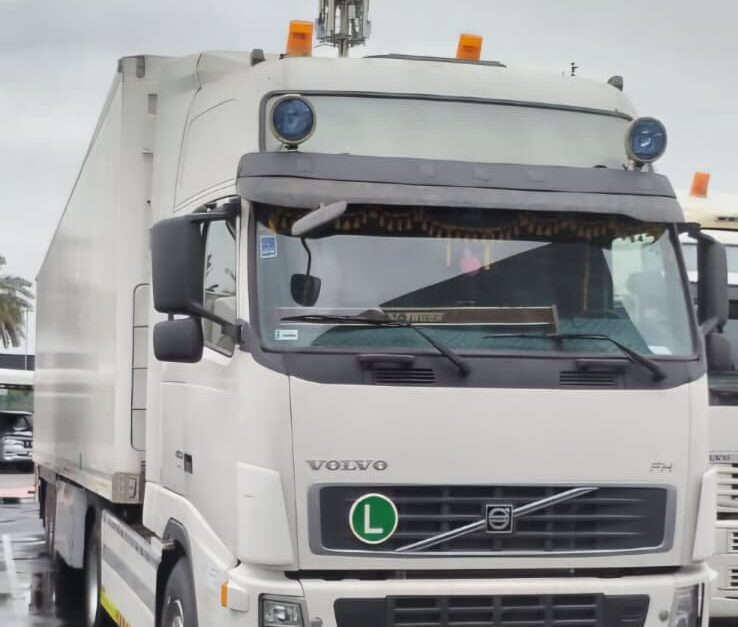
40 Ft Trailer Types in Dubai: Flatbed, Skeletal, Lowbed & Container Explained
If you are planning to move a large load in Dubai, asking for a 40 ft trailer is only the starting point. A transporter will normally need to know what you are carrying, how much it weighs, how it will be loaded, and where it is going before deciding which trailer is actually suitable. There are several 40 ft trailer types, and each one is built around a different transport requirement.
A flatbed can be a practical choice for steel, machinery, and construction materials because it gives you an open loading platform. A skeletal trailer makes more sense when the cargo is a shipping container. A lowbed, on the other hand, becomes useful when you are moving tall or heavy machinery and need to keep the loaded height under control.
So, if you are comparing 40 ft trailer types for a project in Dubai or anywhere in the UAE, the important thing is not simply finding a trailer that is 40 feet long. It is finding a trailer that matches the cargo. This guide explains the main trailer configurations, where each one is useful, and what you should consider before arranging transport.
What Does 40 Ft Trailer Actually Mean?
The term 40 ft mainly tells you about the length class of the trailer. It does not tell you what type of trailer it is. This is an easy point to overlook. Two trailers can both be around 40 feet long while having completely different designs and doing completely different jobs. A flatbed has an open deck. A skeletal trailer is built around the shape and locking points of a shipping container. A lowbed drops the cargo deck closer to the road.
That difference matters once you put real cargo on the vehicle. Moving a steel structure from a fabrication yard to a construction site is a very different job from moving a 40 ft shipping container from a port to a warehouse. Both loads may require a trailer in the 40-foot class, but the appropriate equipment is not necessarily the same. This is why experienced transport planning starts with the cargo, rather than starting with the trailer.
What Are the Main 40 Ft Trailer Types?
The four configurations most relevant to this discussion are
- Flatbed trailers
- Skeletal trailers
- Lowbed or low-loader trailers
- Container chassis or container trailers
There can also be variations within each category. Axle arrangements, deck heights, loading arrangements, and equipment specifications differ between fleets, so published dimensions should be treated as a guide rather than a promise that every trailer will have exactly the same specification.
40 Ft Flatbed Trailer | The Flexible Choice for Large Cargo
A flatbed is probably the easiest trailer to picture. It has a long, open deck without permanent side walls or a roof. That simple design is actually its biggest advantage. When you are moving something awkward, long, or bulky, you may not want the sides of a conventional enclosed trailer getting in the way. A crane can place machinery directly onto the deck. Steel sections can be loaded from above. Some cargo can be loaded from the side when the site allows it.
That flexibility makes flatbeds common for construction and industrial transport.
What can a 40 ft flatbed carry? Depending on the trailer configuration and the actual load, a flatbed may be used for construction materials, steel sections and fabricated structures, industrial equipment, machinery, pipes, generators, and other bulky items that cannot be conveniently loaded through rear doors.
The important thing is not simply whether the cargo physically fits on the deck. Its weight, center of gravity, dimensions, loading method, and securing requirements also need to be considered. A heavy machine may fit comfortably within the deck length but still require careful positioning so the weight is distributed correctly across the trailer and axle group.
The main benefit of a flatbed is access. There is no fixed roof restricting overhead loading, and no permanent side walls preventing access from the sides. For a construction company or industrial business working with cranes and forklifts, that can make a real difference at the loading point.
40 Ft Skeletal Trailer: When the Cargo Is a Shipping Container
A skeletal trailer is a different piece of equipment altogether. Instead of providing a full deck for general cargo, it uses a structural frame designed to support a shipping container, secured through the container’s designated locking points. This is why you will often see skeletal or container chassis trailers around ports, container yards, logistics facilities, and warehouses. The trailer is not really carrying loose cargo the way a flatbed does—the container itself is the cargo unit.
If you are moving a standard 40 ft shipping container, a dedicated container chassis is usually the more logical starting point than a general-purpose flatbed. Typical operations include port-to-warehouse container movement, warehouse-to-port delivery, depot transfers, import and export containers, and container movements between logistics facilities. The exact chassis configuration still needs to be confirmed, as container equipment varies between operators.
A suitably configured flatbed may be able to accommodate certain container movements, but you should not assume every flatbed is automatically prepared for container locking. If your regular work involves shipping containers, tell the transporter that when requesting a quotation. Saying “I need a 40 ft trailer” and saying “I need to move a 40 ft shipping container” are not necessarily the same request.
40 Ft Lowbed Trailer: For Heavy and Tall Machinery
A lowbed, sometimes called a low-loader, is designed around a different problem: keeping the cargo deck low. That becomes particularly useful when transporting machinery that is already tall before it is loaded. Think about an excavator or wheel loader—the machine has its own height, and once placed on a standard trailer deck, the deck height becomes part of the overall transport height. A low bed reduces that contribution.
Lowbeds are commonly considered for excavators, wheel loaders, bulldozers, cranes, generators, and other heavy construction plant. The actual suitability depends on the machine’s weight and dimensions and the trailer’s own configuration.
Why does deck height matter? Imagine two trailers carrying the same excavator. The excavator hasn’t changed, but if one trailer has a significantly lower deck, the total height of the loaded combination is different. That’s the practical reason lowbeds exist—it isn’t simply about “carrying heavier things.” The lower platform helps manage overall loaded height, while the axle arrangement and construction can also be selected around heavy equipment.
A lowbed may make more sense when the machinery is particularly tall, the loaded height needs careful control, or the equipment is heavy and concentrated. But a lowbed isn’t automatically better just because the cargo is heavy—if a machine can be transported safely on a standard flatbed, a specialized lowbed may not add any practical benefit. The cargo should determine the equipment, not the other way round.
40 Ft Container Trailer: What Makes It Different?
You’ll often see the terms container trailer, container chassis, and skeletal trailer used in similar contexts. In everyday transport conversations, they refer to closely related equipment—the important point is that the trailer is designed around standardized shipping containers rather than general loose cargo.
A 40 ft container is itself a standardized cargo unit. The chassis provides the road-going support and locking arrangement needed to move it—the container carries the cargo; the chassis provides the transport platform. This distinction is useful when booking transport, because someone who needs a container moved should describe the container size and type, not only the trailer length.
Flatbed vs. Skeletal vs. Lowbed vs. Container Trailer
There is no single trailer that is “best” for every 40 ft load. The right choice depends on what you are moving.
| Trailer Type | Best Suited For | Main Design Feature | Typical Loading Method |
|---|---|---|---|
| Flatbed | Steel, machinery, construction materials, bulky cargo | Open deck, no fixed sides or roof | Crane, forklift, side, or overhead loading |
| Skeletal | 40 ft shipping containers | Frame built around container locking points | Container handling equipment |
| Low bed | Tall or heavy machinery | Lower cargo deck | Ramps or crane, depending on the machine |
| Container chassis | Containerized freight | Purpose-built container support | Container handling equipment |
Use this as a starting point—before a trailer is dispatched, the actual cargo should still be assessed.
How to Choose the Right 40 Ft Trailer for Your Cargo
A customer may call and say, I have a 40 ft trailer requirement. The useful questions come afterwards.
What are you transporting? Start with the cargo itself. Is it a container, excavator, steel structure, generator, construction material, or general commercial freight? The cargo category immediately narrows down the trailer options.
How much does it weigh? The weight needs to be more than a rough guess. A trailer may have enough physical space for a load but still be unsuitable because of the weight or how it’s distributed. The tractor, trailer, axle configuration, and applicable road limits all form part of the real transport calculation.
What are the actual dimensions? Measure length, width, and height. For machinery, include the machine in its actual transport configuration—if an attachment changes the width or height, that needs to be factored in before the trailer arrives.
How will the cargo be loaded? This one is often overlooked. Will a forklift load it? Will a crane lift it? Does it drive on, or does it need ramps? A trailer that looks suitable on paper can become inconvenient if the loading equipment at the site can’t work with it.
Where is the cargo going? The delivery site matters just as much as the cargo. A large trailer may be fine on the highway but difficult to position inside a crowded industrial yard. Site entrance, turning space, loading area, ground conditions, and warehouse layout all play a part—particularly in busier parts of Dubai where access conditions vary significantly from one site to another.
A Note on Weight Distribution
Suppose a machine weighs within the expected payload range—that doesn’t automatically mean you can place it anywhere on the deck. A concentrated load needs to be positioned with the trailer and axle arrangement in mind. Poor positioning can affect axle loading, vehicle stability, braking, tire loading, and cargo security. That’s why an experienced operator will want to know what the load is and where its weight is concentrated, particularly for heavy machinery.
Choosing a 40 Ft Trailer in Dubai and Across the UAE
Dubai has a mix of construction projects, warehouses, industrial facilities, logistics yards, ports, and commercial sites. A trailer that works perfectly for one type of movement may not be right for another.
A construction contractor may need a flatbed for steel for one week and a lowbed for an excavator the next. A logistics company moving shipping containers has a different requirement altogether. A manufacturer sending industrial equipment to another Emirate may need an open-deck trailer with a particular loading arrangement.
That’s why a proper quotation should begin with the shipment details rather than a generic trailer price. For larger or unusual loads, route and access considerations should also be checked before dispatch—the exact requirements depend on the cargo, dimensions, vehicle combination, and route, so it’s worth confirming these with your transporter rather than assuming.
Common Mistakes When Choosing a 40 Ft Trailer
Booking the trailer before measuring the cargo. Give the transporter the actual dimensions before confirming the equipment—it’s one of the easiest mistakes to avoid.
Assuming every 40 ft trailer is the same. It isn’t. A flatbed, lowbed, and skeletal chassis can all be described using the 40 ft length class while serving very different purposes.
Choosing only according to weight. Weight matters, but height, width, loading method, and weight distribution can completely change the trailer requirement.
Forgetting the loading site. A trailer needs to reach the cargo before it can carry it. Tight loading areas and limited turning space need to be considered before dispatch.
Assuming a flatbed can carry a container. Some can be configured for it; many can’t. Confirm this rather than assuming.
Relying blindly on generic online specifications. Published payload figures from one trailer can’t automatically be applied to another—the exact trailer and vehicle combination should be checked for the actual shipment.
When Does It Make Sense to Rent a 40 Ft Trailer?
Renting can make sense when you have a project that requires a large trailer but don’t want to purchase and maintain your own equipment. This applies to construction companies, contractors, manufacturers, warehouses, logistics companies, importers and exporters, and project-based operations generally.
The rental period depends on the job—some movements need a single trip; others need equipment for a longer project. The important part is choosing the appropriate configuration first, which is where Haulier Transport’s 40 ft trailer fleet can help once you know your cargo type, dimensions, and loading requirements.
What Should You Tell a Transport Company Before Booking?
A short list of accurate information saves a lot of back-and-forth. Before requesting a quotation, prepare:
- Type of cargo
- Length, width, and height
- Approximate weight
- Number of pieces
- Loading method
- Pickup and delivery locations
- Required date
- Any special handling requirements
If it’s machinery, mention the make and model if known. If it’s a container, give the container size. If it’s steel or structural material, provide the dimensions and total weight. The better the information at the start, the easier it is to assign suitable equipment.
Why the Trailer Type Matters More Than the Number “40 Ft”
The phrase 40 ft trailer types can sound like a simple equipment search, but in practical transport, the number “40 ft” is only one part of the decision. A flatbed gives you an open working platform. A skeletal trailer is built around containers. A lowbed changes the relationship between the cargo and the road because the deck sits lower.
Those differences affect loading, cargo security, access, weight distribution, and the overall transport plan—which is why choosing the correct trailer should begin with the cargo, not the length class.
Final Thoughts
Choosing a trailer should never come down to simply asking, Do you have a 40 ft trailer? The better question is, which trailer configuration is right for my cargo? If you’re carrying steel, construction materials, or bulky industrial equipment, a flatbed may give you the loading flexibility you need. If the shipment is a shipping container, a skeletal or container chassis is usually the more natural choice. If you’re moving tall construction machinery, a lowbed may provide a better solution because of its lower deck. Haulier Transport Dubai
If you’re still unsure, give the transporter the cargo dimensions, weight, loading method, and pickup and delivery locations. Those details allow the right equipment to be selected based on the actual job rather than guesswork.
FAQ Section
What are the main 40 ft trailer types?
The most common configurations for large commercial transport are flatbed trailers, skeletal/container chassis trailers, and lowbed trailers. Each serves a different purpose.
What is a 40 ft flatbed trailer used for?
A flatbed is commonly used for machinery, steel, construction materials, industrial equipment, and bulky cargo where open loading access is useful.
What is a skeletal trailer used for?
A skeletal trailer is primarily designed to transport shipping containers using dedicated container locking points.
What is the difference between a flatbed and a skeletal trailer?
A flatbed offers an open deck for general cargo loaded by crane, forklift, or side access. A skeletal trailer is built around a shipping container’s locking points and is designed specifically to carry containers.
When should I use a lowbed instead of a flatbed?
A lowbed may be more suitable when transporting tall or heavy machinery, where reducing the deck height helps manage the overall loaded height.
Can a 40 ft trailer carry a shipping container?
Some flatbed configurations may be equipped for container transport, but this should be confirmed with the transporter rather than assumed. A dedicated skeletal/container chassis is designed specifically for this work.
Are all 40 ft trailers the same size and capacity?
No. The length class may be around 40 feet, but deck width, deck height, tare weight, axle arrangement, and payload can vary between trailer designs.
What information should I provide when requesting a trailer?
Cargo type, dimensions, weight, pickup and delivery locations, loading method, and required date. For machinery or unusual cargo, photos and equipment specs help too.
What type of trailer is best for heavy machinery?
It depends on the machine’s weight, height, center of gravity, and loading method. Some machinery is better suited to a lowbed than a standard flatbed.
How do I choose the right trailer for cargo in Dubai?
Start with the cargo—its type, dimensions, and weight—then factor in the loading method and site access at both pickup and delivery locations before selecting the trailer.

1 Comment
40 Ft Trailer Price in UAE: 2026 Rates & Cost Factors October,21 2026
[…] Trailer type. A flatbed, a skeletal container trailer, and a lowbed are built for different cargo, and heavy-haul equipment costs more to run. If you are unsure which suits your load, read our guide to 40 ft trailer types. […]