


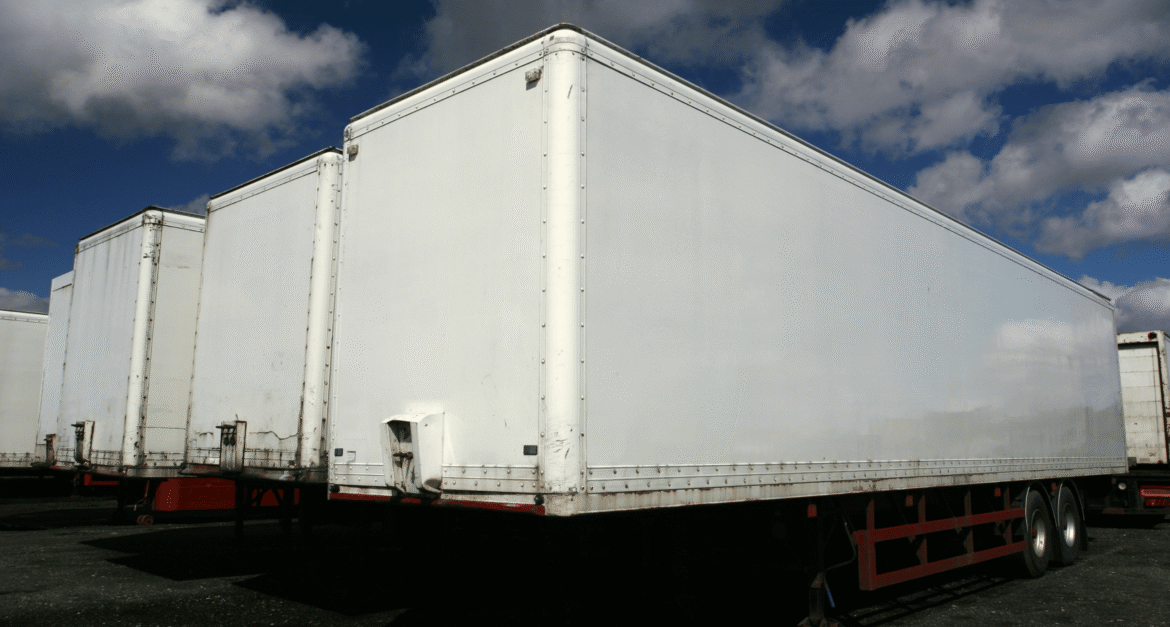
40 Ft Trailer vs 20 Ft Trailer | Capacity, Dimensions, Uses & Cost
Choosing between a 40 ft trailer and a 20 ft trailer is not really about size on paper. It is about whether your cargo, your budget, and your delivery schedule are actually working together or fighting each other. A lot of businesses in Dubai overpay for space they never fill, and just as many underestimate their load and end up booking two trips instead of one.
This guide breaks down the real difference between a 40 ft trailer and a 20 ft trailer, using standard dimensions, payload capacity, common use cases, and the cost logic behind each option, so you can match the trailer to the job instead of guessing. If you already know you need the larger option, our 40 ft trailer rental page covers the flatbed, curtain-side, and low bed variants available for hire in Dubai.
Quick Answer: 40 Ft Trailer vs 20 Ft Trailer at a Glance
| Factor | 20 Ft Trailer | 40 Ft Trailer |
|---|---|---|
| Length | Approx. 20 ft (6.1 m) | Approx. 40 ft (12.2 m) |
| Width | Approx. 8 ft (2.44 m) | Approx. 8 ft (2.44 m) |
| Internal Volume | Roughly 33 cubic meters | Roughly 67 cubic meters |
| Typical Payload | Often close to the 40 ft trailer for dense cargo | Generally higher, up to around 45,000 kg depending on trailer type |
| Best For | Dense, heavy, compact loads | Bulky, high-volume, or long cargo |
| Maneuverability | Easier in tight sites and short streets | Needs more turning space and loading area |
| Cost Logic | Lower cost per trip, higher cost per ton for bulky goods | Lower cost per ton when the load is large enough to fill it |
Understanding Trailer Sizing Before You Book
Trailer sizing in freight and logistics comes from standard shipping container dimensions, since most flatbed and curtain-side trailers in the UAE are built to carry or match these container lengths. That is why you will hear “20 ft” and “40 ft” used interchangeably for both containers and the trailers built to transport them.
The number in the name only tells you the length. What actually decides whether a trailer works for your job is a combination of three things: internal volume, maximum payload, and how your cargo is shaped. A trailer that is technically bigger is not automatically the better choice if your cargo is heavy but small in volume, or long but light.
20 Ft Trailer: Dimensions and Capacity
A standard 20 ft trailer measures around 20 feet (6.1 m) long, 8 feet (2.44 m) wide, and 8.5 feet (2.6 m) high on the outside, with slightly smaller usable internal space once you account for wall thickness. This gives it roughly 33 cubic meters of load volume.
What surprises a lot of first-time renters is that a 20 ft trailer can carry almost as much weight as a 40 ft trailer, because weight limits are set by axle load rules and structural rating, not by length alone. This makes the 20 ft option a strong choice when your cargo is heavy but compact, such as machinery parts, palletized construction material, or dense industrial goods that would not fill a 40 ft deck anyway.
A 20 ft trailer typically makes sense when:
- Your cargo is heavy but does not take up much floor space
- You are working in a site with tight access or limited turning room
- You only need to move a partial load and do not want to pay for empty space
- Your delivery route involves narrow roads or congested areas of the city
40 Ft Trailer: Dimensions and Capacity
A 40 ft trailer runs about 40 feet (12.2 m) long, 8 feet (2.44 m) wide, and 8.5 feet (2.6 m) high, giving roughly double the internal volume of a 20 ft unit at around 67 cubic meters. Depending on the trailer type, flatbed, curtain-side, or low bed, a 40 ft trailer can typically carry anywhere from 20,000 kg up to 45,000 kg.
This is the size most businesses reach for when the cargo is bulky, long, or simply too much for a smaller deck. A full breakdown of the flatbed, curtain, and low bed variants, along with which industries use each one, is covered on our 40 ft trailer rental page.
A 40 ft trailer typically makes sense when:
- You are moving construction materials, heavy machinery, or industrial equipment
- Your cargo is long, oversized, or needs to be transported as a single unit
- You are consolidating multiple smaller shipments into one trip to cut cost per ton
- You need to move containers, vehicles, or bulk goods across Dubai or interstate within the UAE
Capacity Comparison: Volume vs Weight
This is where most people mix up the two trailers. A 40 ft trailer wins on volume every time, roughly double the cubic meters of a 20 ft trailer. But on raw weight capacity, the gap is much smaller than people expect, because both trailer sizes are built around similar axle and structural limits.
In practical terms:
- If your cargo is bulky but light (furniture, packaged goods, insulation material), the 40 ft trailer’s extra volume is what you are actually paying for.
- If your cargo is heavy but compact (steel, machinery, dense pallets), a 20 ft trailer may carry nearly the same weight for a lower cost, since you are not paying for unused floor space.
Uses: Which Industries Choose Which Trailer
Construction and infrastructure: Long steel beams, precast panels, and heavy equipment usually call for a 40 ft flatbed or low bed trailer, since the low bed design handles oversized loads with reduced clearance needs.
Manufacturing and industrial supply: Businesses moving machinery between facilities often use 40 ft trailers to move equipment as a single load rather than splitting it across multiple trips.
Retail, e-commerce, and general trade: Palletized goods and mixed cargo often fit comfortably in a 20 ft trailer, especially for shorter runs within Dubai where maneuverability matters more than raw volume.
Vehicle and bulk goods transport: A 40 ft curtain trailer is commonly used here because the curtain sides allow side-loading while still protecting cargo from weather and road dust.
One-off or smaller project moves: A 20 ft trailer is often the more sensible pick when the job does not justify booking a full 40 ft unit, particularly for single-site deliveries.
Cost Considerations: 40 Ft vs 20 Ft Trailer
Cost should never be judged purely by the size of the trailer. The number that actually matters is cost per ton or cost per cubic meter moved, not the headline rental cost.
A few things that shift the real cost comparison:
- Trip consolidation: Fitting one large shipment into one 40 ft trailer instead of two 20 ft trailers usually reduces total transport cost, fuel use, and driver time.
- Empty space is wasted cost: Renting a 40 ft trailer for a load that only fills a third of it means you are paying for space you never use.
- Access and site conditions: A larger trailer that cannot maneuver into a tight site can create delays, extra handling, or the need for a smaller vehicle anyway, which adds cost indirectly.
- Frequency of trips: For recurring, smaller shipments, a 20 ft trailer on a flexible rental period can be cheaper overall than committing to a larger trailer you do not fully use each time.
Because pricing depends on cargo type, trailer type, rental duration, and route, the most reliable way to compare actual cost is to get a quote based on your specific load rather than relying on a general number.
How to Decide: A Simple Checklist
Before booking, run your shipment through these questions:
- Is my cargo heavy or bulky? Heavy and compact leans 20 ft. Bulky or long leans 40 ft.
- Can I consolidate multiple loads into one trip? If yes, a 40 ft trailer likely lowers your cost per ton.
- What does my site access look like? Tight turns, narrow gates, or congested streets favor the 20 ft trailer.
- Is this a one-time move or a recurring shipment? Recurring smaller loads often suit flexible 20 ft rentals; large one-off industrial moves usually justify a 40 ft trailer.
- Am I transporting a single oversized item? If it cannot be split, the trailer size is dictated by the cargo itself, not by cost preference.
If you are still unsure after running through this list, describing your cargo dimensions and weight to a transport provider is faster and more accurate than guessing from general size charts.
Frequently Asked Questions
Is a 40 ft trailer always cheaper per ton than a 20 ft trailer? Only when the load is large enough to use most of the trailer’s volume or weight capacity. For smaller or lighter shipments, a 20 ft trailer often works out cheaper overall since you are not paying for unused space.
Can a 20 ft trailer carry almost the same weight as a 40 ft trailer? Yes, in many cases. Weight limits are largely set by axle rating and structural design rather than trailer length, so a 20 ft trailer can often carry a similar payload to a 40 ft trailer when the cargo is dense and compact.
Which trailer is better for construction material transport? It depends on the material. Long or oversized items like steel beams or heavy machinery generally need a 40 ft flatbed or low bed trailer. Smaller, palletized construction supplies can often move efficiently on a 20 ft trailer.
Do I need a 40 ft trailer if I am only shipping a partial load?
Not necessarily. If your cargo does not fill a large portion of the trailer, a 20 ft trailer or a shared/partial load option is usually more cost-efficient. What types of 40 ft trailers are available for rent in Dubai? The main types are flatbed trailers for open, bulky cargo, curtain-side trailers for goods that need protection from weather while allowing side-loading; and low bed trailers for oversized or heavy equipment that needs reduced ground clearance. Full details are available on the 40 ft trailer rental page.
Final Thought
There is no single “better” trailer between the two. The right choice comes down to matching trailer volume and weight capacity to what you are actually shipping, not defaulting to the bigger option out of habit. If your cargo is heavy, dense, and manageable in a smaller footprint, a 20 ft trailer can save you money. If it is bulky, long, or part of a larger consolidated shipment, a 40 ft trailer is usually the more efficient route.
For businesses in Dubai that need help matching cargo to the right trailer type, our team can review your load details and recommend the most cost-effective option, including flatbed, curtain-side, and low bed 40 ft trailers, through our 40 ft trailer rental service.
