


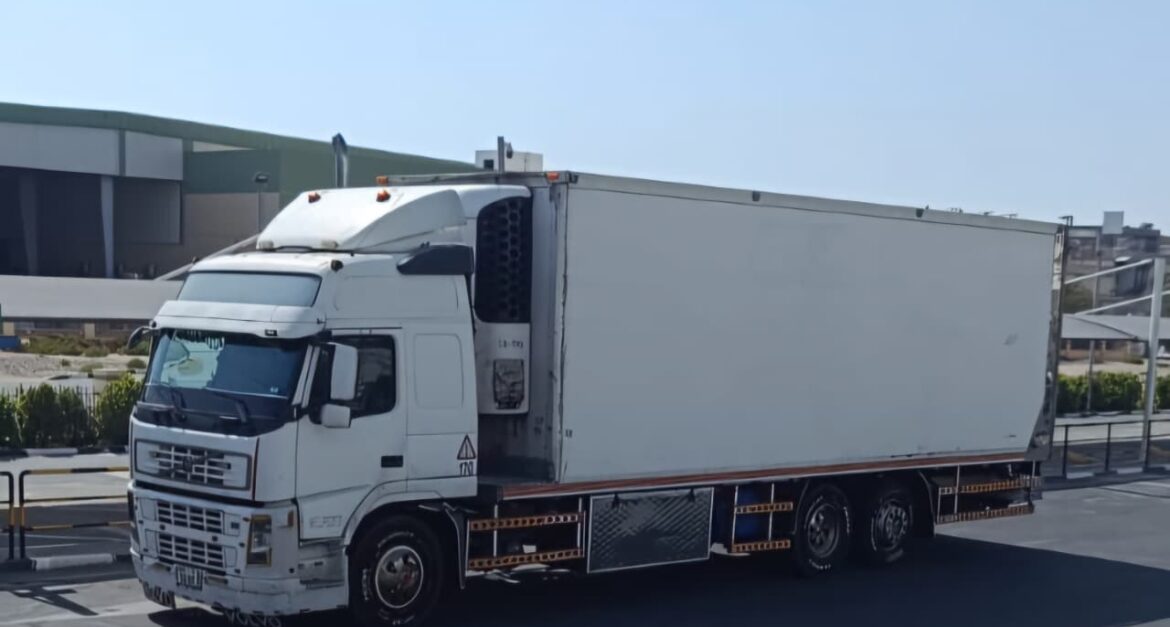
40 Ft Trailer Regulations UAE: Weight, Dimensions, Permits and Transport Requirements
A 40 ft trailer can move large commercial loads across the UAE, but the length of the trailer alone doesn’t decide whether a movement is legal. 40 ft trailer regulations UAE actually come down to the complete vehicle combination: gross and axle weight, overall dimensions, load distribution, technical condition, road requirements, and, for certain exceptional loads, a special transport permit.
For businesses moving containers, machinery, construction materials, steel or other heavy cargo, understanding these requirements before dispatch is what prevents delays, fines, and last-minute compliance problems. This guide walks through the main UAE requirements for 40 ft trailer operations, including the weight limits, dimension rules, permit conditions, and Dubai RTA inspection standards that apply, along with the practical checks worth completing before a heavy load goes on the road.
What Are the Regulations for a 40 Ft Trailer in the UAE?
There isn’t one single legal weight or payload figure that applies to every 40 ft trailer, and that trips up a lot of businesses booking transport for the first time. The applicable limit depends on the number and arrangement of axles, the tractor head and trailer combination, the gross weight of the vehicle and cargo together, axle loading and weight distribution, overall vehicle dimensions, the type of cargo, and whether the load sits within normal dimensions or counts as exceptional.
This distinction matters because a trailer can be physically capable of carrying a load without that load being legally permitted on the road. UAE heavy-vehicle rules, set out under Federal Decree No. 12 of 2023 and Cabinet Resolution No. 138 of 2023, establish the maximum weights and dimensions nationally, while individual authorities such as Dubai’s RTA can apply additional technical and inspection requirements on top of that federal baseline.
How Much Weight Can a 40 Ft Trailer Carry in the UAE?
One of the most common mistakes is treating trailer payload capacity and legal vehicle weight as the same thing, when they’re not. A trailer manufacturer’s specification tells you how much cargo the equipment can technically hold, but road regulations look at the weight of the complete heavy vehicle, tractor and trailer together, against its permitted axle configuration. Under the federal heavy-vehicle framework confirmed by the Ministry of Energy and Infrastructure, maximum gross weights scale with axle count as follows:
| Heavy Vehicle Axles | Maximum Gross Weight |
|---|---|
| 2 axles | 21 tonnes |
| 3 axles | 34 tonnes |
| 4 axles | 45 tonnes |
| 5 axles | 56 tonnes |
| 6 axles | 65 tonnes |
These figures are not the cargo payload of a 40 ft trailer on their own. Gross weight covers the whole vehicle combination, so it has to be read alongside axle loading and the vehicle’s approved specifications rather than quoted as a standalone “trailer capacity” number.
Gross Weight vs Payload: What’s the Difference?
Gross vehicle weight is the total weight of the vehicle combination plus its load. Payload is just the cargo weight being carried. If a tractor-trailer combination has a permitted gross weight of, say, 45 tonnes, and the tractor, trailer, and any fitted equipment already account for a chunk of that, whatever’s left is the legal room for cargo, not the full 45 tonnes. This is why a transport operator should work out the actual vehicle-and-load combination for each job instead of relying on a blanket claim like “a 40 ft trailer carries X tonnes.”
Why Axle Weight Matters
Total weight is only half the calculation. A load can sit comfortably under the overall weight limit and still cause a problem if too much of it is concentrated on one axle or axle group, and that kind of imbalance affects vehicle stability, braking performance, tyre loading, steering, suspension components, road safety and legal compliance all at once. Heavy cargo needs to be positioned and secured with the vehicle’s axle configuration in mind, not just its total weight allowance.
What Are the Legal Dimensions for Heavy Vehicles in the UAE?
Dimensions are the other half of 40 ft trailer regulations UAE, and they’re often misunderstood in the same way weight is. A 40 ft trailer is roughly 12.2 metres long on its own, but the legal measurement that matters is usually the complete tractor-head and semi-trailer combination, not just the trailer deck.
The federal heavy-vehicle requirements set these maximum dimensions:
| Vehicle Configuration | Maximum Length | Maximum Width | Maximum Height |
|---|---|---|---|
| Single heavy vehicle | 12.5 m | 2.6 m | 4.6 m |
| Truck head + semi-trailer | 21 m | 2.6 m | 4.6 m |
| Truck head + trailer + semi-trailer | 28 m | 2.6 m | 4.6 m |
This table also explains why it’s inaccurate to call the 21-metre figure “the legal length of a 40 ft trailer.” That number describes the vehicle combination as a whole, not the trailer body by itself.
40 Ft Trailer Length, Width and Height
A standard 40 ft trailer measures around 12.19 metres. But operators shouldn’t stop at the trailer body when checking dimensions, since the tractor head, coupling arrangement, cargo position and any overhang can all push the overall combination past what’s allowed.
Width is capped at 2.6 metres under the federal rules for the relevant heavy-vehicle configurations, and cargo that extends beyond that can shift the whole movement into a different regulatory category requiring extra approval.
Height matters most when moving tall machinery or structures. The federal maximum is 4.6 metres, but Dubai’s route-specific conditions still need checking before dispatch, since a load that’s technically within the legal height can still run into bridges, gantries, industrial entrances, loading yards or warehouse doors it can’t physically clear. Height is a route-planning question as much as a legal one, so it’s worth checking before loading starts, not after.
Does a 40 Ft Trailer Need a permit in the UAE?
Not automatically. A trailer being 40 feet long doesn’t by itself trigger a special oversized-load permit. What matters is whether the vehicle and cargo stay within the legal weight and dimensional limits, and whether the movement falls into a category that requires extra authorization regardless of size.
When Can a Special Transport Permit Be Required?
A permit tends to come into play when a load can’t reasonably be divided and moving it would exceed the normal permitted weight or dimensions. That covers things like large industrial machines, heavy plant, structural components, industrial tanks and other large engineering equipment. The exact process depends on the type of movement, how far it exceeds normal limits, the route and the relevant authority.
The core point is simple: a trailer’s physical capacity to carry something is not the same as permission to carry it on the road. That assessment needs to happen before the vehicle leaves the loading location, not after.
Dubai RTA Trailer Inspection and Safety Requirements
Businesses running trailers in Dubai also need to factor in the technical requirements administered through the Roads and Transport Authority. RTA’s trailer and semi-trailer inspection process covers vehicle dimensions, lighting, reflectors, body and structural condition, coupling and towing security, protection against trailer separation, impact guards, the parking brake, mudguards, tires, tire-pressure monitoring, and emergency equipment, depending on the vehicle and inspection type.
A trailer used for commercial transport should be treated as regulated road equipment, not just a platform for stacking cargo. Confirming the trailer and tractor combination suits the cargo weight, dimensions, loading method, route and towing condition before accepting a job is what keeps a mechanical or compliance issue from derailing an entire delivery schedule, and that matters even more for high-value or time-sensitive freight.
Load Distribution and Securing Requirements
Correct load securing is central to safe heavy-cargo transport. UAE requirements focus on making sure cargo is properly distributed and fixed to the vehicle, because the goal isn’t just stopping the load from falling off, it’s keeping it stable through braking, acceleration, turning and changing road conditions.
A proper loading assessment covers five things: the actual cargo weight rather than an estimate based on dimensions; the centre of gravity, since heavy equipment sitting high can behave very differently from a low, evenly spread load; axle distribution, so weight lands appropriately across the vehicle’s axle groups; the securing method itself, whether that’s chains, straps, locking systems or blocks suited to the cargo; and controlling movement during normal road travel. For containerized cargo, the locking and securing arrangement needs to be verified before departure as well.
What Should Be Checked Before a 40 Ft Trailer Starts a Trip?
A professional transport job shouldn’t begin with loading. A pre-dispatch check catches problems while they’re still cheap to fix, and it’s worth running through the full list rather than eyeballing the load:
- Confirm the actual cargo weight and dimensions
- Confirm the trailer and tractor configuration
- Review gross vehicle and axle-weight requirements
- Check the overall loaded height and width
- Position the cargo for suitable weight distribution
- Secure the load correctly
- Inspect tyres and pressure-monitoring equipment where applicable
- Check lights, reflectors, brakes and the parking brake
- Confirm coupling and trailer connection security
- Review the planned route and identify height or access restrictions
- Determine whether special approval or a permit is required
- Confirm the destination’s loading and unloading arrangements
- Keep the required vehicle and transport documentation available
This kind of process pays off most on heavy or high-value cargo, where fixing a loading problem at the origin is far easier than dealing with it once the vehicle is already on the road.
Can a 40 Ft Trailer Transport Heavy or Oversized Cargo?
Yes, but heavy cargo and oversized cargo aren’t the same thing, and treating them as interchangeable is where a lot of planning goes wrong. Heavy cargo is about weight. Oversized cargo is about exceeding normal length, width or height. A load can be heavy but within normal dimensions, oversized but relatively light, both at once, or neither.
The transport solution changes depending on which of those applies, so for an oversized or exceptional movement, the operator needs to assess the cargo dimensions, the total vehicle combination, the route and any permit requirements before selecting equipment. Asking “can a 40 ft trailer carry this?” isn’t really the right question. The better one is whether this specific tractor-trailer combination can legally and safely carry this specific load on the intended UAE route.
40 Ft Trailer Transport in Dubai and Across the UAE
Dubai is one of the UAE’s busiest logistics hubs, with cargo moving constantly between warehouses, ports, industrial areas and construction sites. For a trip starting in Dubai and heading to another emirate, transport planning has to account for the full route, not just the loading point, which means checking vehicle and cargo dimensions, total weight, axle distribution, route restrictions, destination access, applicable authority requirements and whether the load needs special authorization. This matters most for industrial cargo and construction equipment, where unusual dimensions or weight are more likely.
How to Choose the Right 40 Ft Trailer for Your Cargo
Choosing a trailer should start with the cargo, not the trailer length. That means knowing exactly what’s being transported, its verified weight, its length, width and height, whether it can be loaded safely with the equipment on hand, whether the route has access, height or road restrictions, how the cargo will be restrained during transport, and whether the tractor and trailer combination actually suits the load.
For businesses that need a suitable 40 ft trailer for commercial cargo movement in Dubai, Haulier Transport provides 40 ft trailer transport matched to cargo and project requirements rather than a one-size-fits-all setup.
Federal UAE Regulations vs Dubai Requirements: What Should Businesses Follow?
This is worth spelling out clearly. Federal legislation sets the broader framework for heavy vehicles, including the maximum weight and dimension figures covered above, while Dubai’s RTA layers on its own technical inspection and vehicle requirements. A responsible transport plan shouldn’t rely on a single number pulled from a generic trailer-rental website. It needs to account for federal requirements together with Dubai or RTA requirements where applicable, the vehicle’s actual specifications, the cargo’s characteristics, route conditions and any permit needs. That combination gives a far more reliable basis for planning a legal, safe movement than any single figure on its own.
Common Mistakes Businesses Make With 40 Ft Trailer Transport
Assuming 40 ft means a fixed legal payload is the first one, since trailer length doesn’t set the legal cargo weight. Looking only at total weight and ignoring axle distribution is the second. Measuring just the trailer instead of the complete loaded vehicle combination is the third.
Assuming every oversized load is automatically allowed is the fourth, when exceptional loads can require specific authorization. Ignoring route restrictions is the fifth, since a load can fit the trailer and still hit problems along the way. Treating trailer capacity as legal permission is the sixth, when equipment capability and road legality are two separate questions. And leaving load securing until the last minute is the seventh, when it should be planned around the cargo before loading even begins.
Frequently Asked Questions About 40 Ft Trailer Regulations in UAE
What are the 40 ft trailer regulations in UAE? A 40 ft trailer has to comply with requirements covering vehicle weight, axle loading, dimensions, load distribution, securing, technical condition and road use, with special permits required for certain exceptional or non-divisible loads.
What is the maximum weight for a 40 ft trailer in UAE? There’s no single maximum cargo-weight figure that applies to every 40 ft trailer. UAE heavy-vehicle limits vary by axle configuration and apply to the vehicle combination’s gross weight, so the trailer’s own payload specification shouldn’t be confused with the legal road limit.
How much weight can a 40 ft trailer carry in Dubai? It depends on the complete tractor-trailer configuration, vehicle specifications, gross weight, axle distribution and applicable regulations, so the correct payload needs to be calculated for the specific vehicle and load rather than pulled from a generic 40 ft figure.
What are the legal dimensions of a heavy vehicle in UAE? Federal requirements set maximum dimensions by vehicle configuration. For a truck head and semi-trailer combination, the published maximum is 21 metres in length, 2.6 metres in width and 4.6 metres in height.
Does a 40 ft trailer need a permit in UAE? Not simply because it’s 40 feet long. A special permit may be required where an exceptional or non-divisible load exceeds normal weight or dimension limits, and the specific movement should be assessed before dispatch.
What are the RTA requirements for trailers in Dubai? Dubai RTA’s technical requirements cover dimensions, lighting, reflectors, structural condition, coupling security, brakes, tyres, impact protection and other safety equipment as part of trailer and semi-trailer inspection.
What’s the difference between trailer payload and gross vehicle weight? Payload is the cargo being carried. Gross vehicle weight is the complete vehicle combination plus its load, so the legal gross-weight limit can’t be treated as the trailer’s available cargo capacity.
Can a 40 ft trailer carry oversized cargo? It can, for suitable heavy or oversized cargo, but the actual movement depends on cargo dimensions, weight, vehicle configuration, route and any permit requirements, all of which should be assessed before dispatch.
Why is axle weight important for a 40 ft trailer? Axle loading affects vehicle stability, braking, tyres, suspension and road safety, and a load can have an acceptable total weight while still being poorly distributed across the axle groups.
What should I check before booking a 40 ft trailer? Confirm the cargo’s weight and dimensions, the loading method, destination access, route, required trailer configuration and any special permit requirements, since accurate cargo information is what lets the transport operator select the right equipment and plan the movement properly.
Final Takeaway
Understanding 40 ft trailer regulations in UAE means going beyond the fact that a trailer is 40 feet long. Legal and safe transport comes down to the complete vehicle combination, gross and axle weight, overall dimensions, load distribution, cargo securing, technical condition and any special approvals an exceptional movement might need. The safest approach for a business is to confirm the cargo specifications first, then match the vehicle, route and compliance requirements to that load.
If you’re planning commercial cargo transportation in Dubai and need a 40 ft trailer, Haulier Transport can assess the cargo and project requirements and help work out the right transport solution.
