


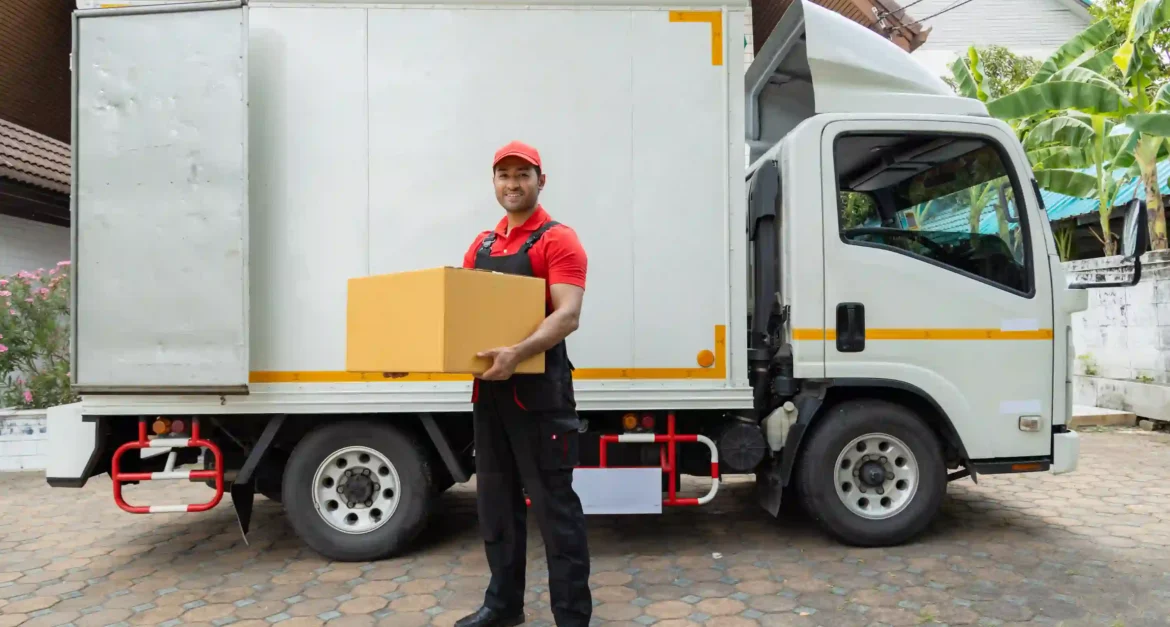
Cold Chain Transportation in Dubai | A Complete Guide for Businesses
If your business moves dairy, seafood, fresh produce, prepared food, beverages, pharmaceuticals, or other temperature-sensitive products, getting goods from one location to another is not simply a matter of arranging a delivery vehicle. Cold chain transportation in Dubai requires the transport arrangement to match the product, cargo volume, delivery route, and timing.
This becomes especially important when deliveries involve multiple locations, strict receiving windows, or products that cannot be exposed to unsuitable conditions for extended periods. A restaurant may need ingredients delivered before its kitchen starts preparing meals. A catering company may need food and supplies at an event venue at a specific time. A distributor may need to serve several customers on the same route.
So the right question is not simply, “Which refrigerated vehicle should I use?“
It is “What does my business need to transport? Where does it need to go? And what transportation arrangement fits that operation?”
This guide explains how cold chain transportation works from a business perspective, who needs it, what to consider before arranging transport, how to plan deliveries, and when a dedicated chilled vehicle may be appropriate.
What Is Cold Chain Transportation?
Cold chain transportation is the movement of temperature-sensitive products between locations under conditions suited to that cargo. It is one link in a wider cold chain logistics system that also includes storage, handling, and final delivery. For a business, the practical question is rarely “what is cold chain transportation” in the abstract. It is closer to: does my product, route, and delivery schedule call for a temperature-controlled arrangement, and if so, what does that arrangement need to look like. The rest of this guide works through exactly that, from identifying what you’re moving to choosing the transportation option that fits.
The transport arrangement needs to make sense for:
- The type of product
- Its required transportation conditions
- Cargo quantity and volume
- Pickup and delivery locations
- Number of stops
- Route and journey time
- Delivery schedule
- Frequency of transportation
- Special handling or documentation requirements
Why Cold Chain Transportation Matters for Businesses in Dubai
Dubai’s climate and busy commercial environment make transportation planning particularly important for temperature-sensitive goods. High ambient temperatures can increase the challenge of moving perishable products, while traffic, loading delays, multiple delivery stops, and strict receiving windows can affect the overall journey. For businesses, an unsuitable transport arrangement can contribute to product deterioration, avoidable waste, disrupted deliveries, and unhappy customers.
A properly planned transportation solution can help businesses:
- Move temperature-sensitive goods more reliably
- Protect product quality during transportation
- Reduce avoidable product losses
- Match vehicle capacity with actual cargo requirements
- Support recurring delivery routes
- Coordinate multiple commercial destinations
- Work around defined delivery windows
- Build a more predictable distribution process
However, cold chain transportation is not only about dealing with Dubai’s heat. The product, route, vehicle, loading process, delivery schedule, and business operation all need to work together.
Cold Chain Logistics in Dubai: How Transportation Fits Into the Supply Chain
Cold chain logistics is broader than refrigerated transportation.
A simplified cold chain can look like:
Production → Cold Storage → Transportation → Distribution → Retail / Business → Customer
Transportation is the link connecting different stages of that supply chain. This distinction matters because a business may have suitable cold storage but still need an appropriate transportation solution to move products between locations.
For example, a supplier could be moving chilled products from a warehouse to:
- Restaurants
- Hotels
- Supermarkets
- Catering venues
- Retail stores
- Distribution centres
The transportation requirement changes depending on the number of destinations, cargo volume, and delivery schedule. That is why businesses looking for cold chain logistics services in Dubai should consider the complete delivery requirement rather than choosing a vehicle based only on its name.
Which Businesses Need Cold Chain Transportation in Dubai?
Cold chain transportation is relevant to many industries. What they have in common is the need to move products that can be affected by temperature or require specific transportation conditions.
Food and Beverage Businesses
Food suppliers, manufacturers, and distributors may transport dairy products, meat, seafood, beverages, prepared foods, and fresh produce.
The requirement can vary significantly between businesses. A supplier delivering one large shipment to a warehouse has a different transportation requirement from a distributor making several deliveries to restaurants throughout the day.
Restaurants
Restaurants depend on reliable deliveries of ingredients and other supplies.
A restaurant receiving dairy products, meat, seafood, beverages, or fresh produce may need transportation that fits its receiving schedule and storage capacity. For businesses making regular deliveries, the route and delivery frequency can be just as important as the vehicle itself.
Catering Companies
Catering operations often involve time-sensitive deliveries. A catering business may need ingredients or prepared food transported from a kitchen or supplier to a wedding, corporate function, hotel, or other event venue. The delivery window can therefore become a critical part of the transportation plan. For catering businesses, cold chain logistics for catering is not simply about maintaining suitable conditions; it is also about coordinating transportation with preparation, setup, and service schedules.
Hotels and Hospitality Businesses
Hotels may receive chilled food, dairy products, fresh produce, beverages, and other temperature-sensitive supplies. Their requirements can involve regular deliveries to a central receiving point or multiple hospitality locations. A reliable transportation plan can help businesses coordinate supply deliveries around their operational schedules.
Supermarkets and Retailers
Supermarkets and retailers may move temperature-sensitive products between suppliers, warehouses, distribution centres, and stores. Larger distribution operations may require higher-capacity refrigerated vehicles, while smaller retailers may require more frequent deliveries with smaller loads. The right refrigerated transport for supermarkets therefore depends on the distribution model, not simply the size of the business.
Online Grocery and Quick Commerce
Online grocery platforms and quick-commerce delivery operators are a growing user of cold chain transportation in Dubai. Fast delivery windows leave little margin for temperature loss between pickup and the customer’s door, which makes vehicle readiness and route planning as important as the cooling unit itself.
Meat, Seafood, and Dairy Suppliers
Meat, seafood, and dairy distributors frequently serve restaurants, hotels, supermarkets, and other commercial customers, often on the same run. These multi-customer routes make delivery sequencing a real planning factor, since a supplier delivering meat and dairy on the same trip needs to think about loading order and stop sequence, not just the vehicle’s temperature setting.
Fresh Produce Businesses
Fresh produce can be sensitive to transportation conditions, but requirements vary between products. A leafy green and a root vegetable do not behave the same way in transit, and ripeness stage can affect how a product tolerates handling and short exposure windows. Businesses should identify the appropriate transportation conditions for their specific products instead of assuming that all fresh produce requires exactly the same treatment.
Pharmaceutical and Healthcare Businesses
Pharmaceutical and healthcare products can have specific transportation requirements determined by the product, manufacturer, and applicable handling instructions. Businesses transporting medicines or other temperature-sensitive healthcare products should establish those requirements before arranging transportation. Important: Pharmaceutical transportation should only be promoted where the transport provider can genuinely support the required handling, documentation, and compliance expectations.
What Should Businesses Consider Before Arranging Cold Chain Transportation?
Before asking for a quote, gather the information that a transportation provider needs to understand the actual job.
1. Product Type
Start with exactly what you are transporting. Is it chilled food, frozen food, dairy, meat, seafood, fresh produce, beverages, pharmaceutical products, or another temperature-sensitive product? The product determines the transportation conditions that need to be considered.
2. Required Transportation Conditions
Do not select a vehicle simply because it is described as “refrigerated.” The vehicle should be appropriate for the product’s actual transportation requirements. Where product documentation or manufacturer instructions specify particular conditions, those requirements should take priority.
3. Cargo Volume
Estimate the quantity and volume of the shipment. A small restaurant delivery may require a very different vehicle from a distributor replenishing several retail locations. The objective is to match vehicle capacity with the real cargo requirement, rather than automatically selecting the largest vehicle available.
4. Pickup Location
Provide the exact pickup point and explain any access or loading considerations. A warehouse, commercial kitchen, factory, or distribution centre may each have different loading procedures.
5. Delivery Locations
Identify every delivery location. If the shipment has several destinations, provide the complete list before planning the route. This helps the transportation provider understand whether the requirement is a simple point-to-point delivery or a multi-stop distribution route.
6. Number of Stops
A multi-stop route requires more planning than a single delivery. The number and sequence of stops can influence journey duration, delivery scheduling, cargo accessibility, route planning, and receiving windows.
7. Delivery Time
Tell the provider when the goods need to arrive. This is particularly important for restaurants, hotels, catering companies, supermarkets, retail businesses, and event venues. A delivery arriving outside the agreed receiving window can create operational problems even if the vehicle reaches the correct location.
8. Delivery Frequency
Is the requirement one-time, daily, weekly, seasonal, or ongoing? Recurring requirements may be better suited to an ongoing transportation arrangement rather than individual ad-hoc bookings.
9. Loading and Unloading Requirements
Explain any unusual loading or unloading requirements before booking, such as multiple delivery points, restricted access, large quantities, palletised cargo, time-sensitive unloading, or commercial receiving windows.
10. Monitoring and Documentation
Some businesses require delivery records, temperature records, or other documentation. The exact requirement depends on the cargo and business operation. Identify these needs before arranging transportation so expectations are clear.
Choosing the Right Cold Chain Transportation Solution
There is no universal refrigerated vehicle that is suitable for every business. The appropriate solution depends on the cargo, required conditions, load size, route, and delivery model.
Chilled Transportation
Chilled products generally require a refrigerated environment appropriate for their specified conditions. This can apply to products such as dairy, fresh food, beverages, and other chilled goods. The vehicle’s actual operating capability should be checked against the product requirement.
Frozen Transportation
Frozen products have different requirements from chilled products. Businesses transporting frozen food or other frozen cargo should use equipment designed for the required frozen conditions rather than treating frozen and chilled transportation as interchangeable.
Larger Refrigerated Vehicles
Businesses moving larger loads or supplying several commercial locations may require a higher-capacity refrigerated truck. This can be useful for distribution operations where a smaller refrigerated van would not provide enough practical cargo space.
Multi-Temperature Requirements
Some businesses handle different products with different transportation requirements. Where a vehicle is specifically designed for separate temperature zones, a multi-temperature solution may be considered. The configuration should always be confirmed before loading different product categories together.
Cold Chain Transportation Planning for Dubai Deliveries
Good planning starts before the vehicle arrives. A business should map the movement of its products from pickup through final delivery.
Step 1: Identify the Cargo. Know exactly what you are transporting and what conditions it requires.
Step 2: Estimate the Load. Determine the approximate quantity, volume, and loading requirements.
Step 3: Map the Route. List: Pickup → Stop 1 → Stop 2 → Stop 3 → Final Delivery. This immediately gives the transport provider a better understanding of the job.
Step 4: Identify Delivery Windows. Record when each location can receive the shipment.
Step 5: Determine Frequency. Establish whether the transportation is occasional or recurring.
Step 6: Select the Vehicle. Choose a vehicle based on the product, load, and route rather than availability alone.
Step 7: Discuss Special Requirements. Communicate access restrictions, loading requirements, monitoring needs, or other relevant details.
Step 8: Request a Specific Quote. Instead of asking “how much is refrigerated transport,” provide cargo type, approximate load, pickup, delivery, stops, date, time, and frequency. This allows the transportation provider to understand the actual transportation requirement.
Common Cold Chain Transportation Challenges in Dubai
Dubai’s heat, traffic, and multi-stop delivery patterns all put pressure on temperature-sensitive cargo, and these are well-documented operational risks rather than rare edge cases. Loading delays, tight receiving windows, and the wrong vehicle for the job are the most common causes of problems.
For a detailed breakdown of what causes these issues and how to prevent them during the actual journey, see our guide on How to Maintain Cold Chain During Transportation in Dubai.
Cold Chain Transportation vs Standard Transportation
The biggest difference is that product conditions become a central part of the transportation plan.
| Standard Transportation | Cold Chain Transportation |
|---|---|
| Usually carries ambient goods | Carries temperature-sensitive goods |
| Temperature may not be a major consideration | Required transportation conditions are central |
| Standard vehicle may be suitable | Refrigerated or temperature-controlled vehicle may be required |
| Planning mainly focuses on route and delivery | Planning considers product, vehicle, route, and delivery conditions |
| Suitable for goods that tolerate ambient conditions | Suitable for products affected by temperature |
This does not mean every temperature-sensitive product needs the same type of vehicle. The appropriate solution depends on the actual product and delivery requirement.
How to Choose a Cold Chain Transportation Provider in Dubai
Price matters, but the more useful filter is whether a provider actually engages with your delivery pattern before quoting.
Before choosing a provider, ask:
- Do they ask about your route and stop count before quoting, or just the vehicle type?
- Can they support a recurring schedule, not just one-off bookings?
- Do they understand the difference between a single-drop delivery and a multi-stop distribution run?
- How do they handle a change in your delivery requirement after booking?
A provider that asks about your actual delivery operation before offering a vehicle is usually a better sign than one that leads with price.
When Should a Business Consider a Dedicated Chilled Vehicle?
A dedicated chilled vehicle may become useful when a business has recurring chilled transportation requirements. This can include businesses with regular chilled deliveries, multiple customer locations, recurring routes, defined delivery windows, growing order volume, seasonal demand, limited refrigerated capacity, or frequent restaurant or retail deliveries.
For example, a catering company delivering to several venues may have a very different transportation requirement from a small business making one chilled delivery each week. A more useful starting question than “Do I need a chiller van?” is what your delivery operation actually requires and which refrigerated transportation option fits that. If your business specifically needs a dedicated chilled vehicle for deliveries in Dubai, explore our Chiller Van Rental Dubai service to determine whether that type of arrangement fits your requirements.
Cold Chain Transportation Checklist for Businesses
Before requesting a transportation quote, prepare:
- Product type
- Required transportation conditions
- Approximate cargo volume
- Pickup location
- Delivery location
- Number of stops
- Delivery date
- Delivery time
- Delivery frequency
- Vehicle capacity requirement
- Monitoring requirements
- Documentation requirements
- Loading and unloading considerations
- Access restrictions
- Special handling requirements
Having this information ready can make the quotation process faster and help the provider understand what you actually need.
Frequently Asked Questions
What Is Cold Chain Transportation in Dubai?
It’s the transport side of a business’s cold chain, moving temperature-sensitive goods under conditions suited to the product, rather than any refrigerated vehicle by default. Businesses typically need it when a product can be damaged by heat exposure during pickup, transit, or multiple delivery stops.
What is the difference between cold chain logistics and refrigerated transportation?
Refrigerated transportation is one part of cold chain logistics. Refrigerated transportation focuses on moving temperature-sensitive goods, while cold chain logistics can cover the broader journey from storage and handling through transportation, distribution, and final delivery.
Why do businesses need cold chain transportation?
Businesses use cold chain transportation when their products can be affected by unsuitable transportation conditions. Common examples include chilled food, frozen goods, dairy, meat, seafood, fresh produce, and certain pharmaceutical products.
What products require temperature-controlled transportation?
Requirements depend on the product. Common examples can include chilled and frozen foods, dairy products, meat, seafood, fresh produce, beverages, and certain pharmaceutical or healthcare products.
How do I plan cold chain transportation?
Start with the product and its transportation requirements. Then determine cargo volume, pickup and delivery locations, number of stops, delivery windows, frequency, and any monitoring or documentation requirements before selecting an appropriate transport option.
What should I consider when choosing refrigerated transport in Dubai?
Consider the product, required conditions, vehicle capacity, route, number of stops, delivery window, transportation frequency, monitoring requirements, and the provider’s ability to handle your specific delivery model.
When might a business need a dedicated chilled vehicle?
A dedicated chilled vehicle may make sense for businesses with regular chilled deliveries, recurring routes, multiple delivery locations, defined delivery windows, or insufficient in-house refrigerated capacity.
Is cold chain transportation only for food businesses?
No. Food and beverage businesses are major users, but temperature-controlled transportation can also be relevant to pharmaceutical, healthcare, retail, hospitality, fresh produce, and other industries handling temperature-sensitive products.
Need Cold Chain Transportation in Dubai?
The right transportation arrangement starts with the right information. Before requesting a quote, be ready to explain: what are you transporting? How much? Where is it being collected? Where does it need to go? How many stops are involved, and when does it need to arrive? Those details help a transportation provider understand whether you need a simple refrigerated delivery, recurring distribution support, or a dedicated chilled vehicle.
If you are looking for cold chain transportation in Dubai, Haulier Transport can discuss your cargo, route, and delivery requirements and help identify the appropriate transportation option for your business.
Request a Quote | Call Haulier Transport | WhatsApp the Team
